How to balance cost and performance requirements when selecting FGR series planetary reducers
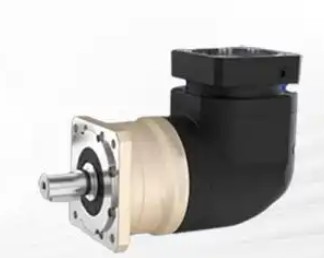
The core idea for balancing the cost and performance of the FGR series planetary gearbox is to first lock the torque/speed ratio/accuracy baseline according to the working conditions, and then compress the cost through reasonable selection of specifications, stages, accuracy levels, and configurations without sacrificing reliability. FGR is a precision type with right angle installation and helical teeth. Its cost is usually higher than that of ordinary planets, but lower than imported brands with the same precision. The key lies in precise matching rather than blindly upgrading.
1、 First, clarify the performance baseline (to avoid "insufficient low-end configuration")
1. Torque matching (most crucial, directly determining specifications and lifespan)
Formula: Actual load torque x safety factor (1.5~2.0) ≤ rated output torque of reducer
FGR series torque range: FGR060 (≈ 60Nm) → FGR160 (≈ 650Nm)
Cost impact: For each level of specification, the price is approximately+20% -30%; I would rather choose the enhanced version in the lower tier than the regular version in the higher tier.
2. Matching the reduction ratio with the number of stages (the balance point between efficiency, noise, and cost)
Single stage (i=3-20): Efficiency ≥ 95%, backlash ≤ 1-10 arcmin, low cost, low noise
Double stage (i=12~200): Efficiency ≥ 92%, backlash ≤ 3~12 arcmin, high cost, large volume
Selection principle: prioritize single level; Double stage is only used when the speed ratio is greater than 20; Avoid using dual stages to achieve low speed ratios (wasting costs and reducing efficiency).
3. Precision (backlash) grading (selected by scene, not blindly pursuing 1 arcmin)
Standard level: Single level ≤ 10arcmin, double level ≤ 12arcmin, with the lowest cost, suitable for ordinary automation and conveyor lines
Precision grade: single-stage ≤ 3arcmin, two-stage ≤ 5arcmin, moderate cost, suitable for CNC, cutting, and general servo positioning
Ultra high precision level: single-stage ≤ 1arcmin, two-stage ≤ 3arcmin, with the highest cost, suitable for robots, visual positioning, and high-end machine tools
Cost difference: Precision grade is approximately 30% more expensive than standard grade; Ultra high precision grade is approximately 50% more expensive than precision grade.
4. Input speed and operating conditions (affecting lifespan and failure rate)
FGR allows a maximum input of 8000rpm, but long-term recommendation is ≤ 3000rpm (longer lifespan, lower heat generation)
Continuous operation: choose standard backlash+conventional lubrication, low cost
Frequent start stop/impact: The safety factor is set at 2.0~2.5, and reinforced bearings/hardened gears can be selected (cost+10%~15%, but lifespan doubled)
2、 Cost optimization strategy (avoiding "high configuration waste money")
1. Selection of specifications for "card edge" (without amplifying torque redundancy)
Example: Calculate the required torque of 80Nm → select FGR090 (≈ 90Nm), do not select FGR120 (≈ 120Nm)
Redundancy control within * * 10%~30% * * is sufficient; Excessive redundancy=cost waste+increased volume and weight.