What factors affect the overall efficiency of the R series helical gear reducer
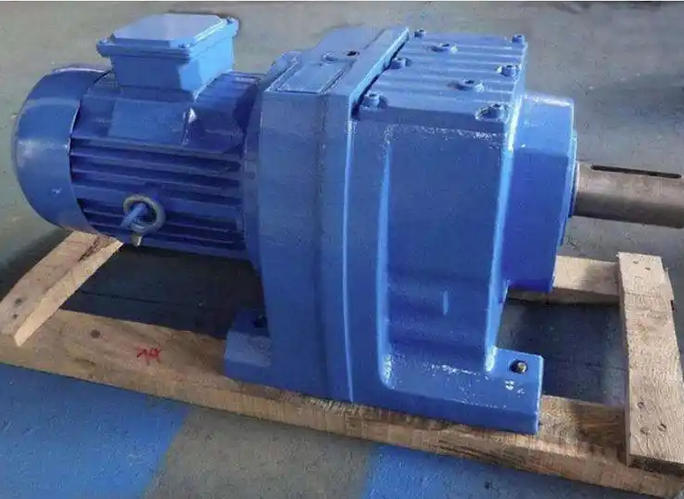
The overall efficiency of the R series helical gear reducer is a comprehensive performance indicator, which not only depends on the design and manufacturing level of the reducer itself, but also closely related to the actual operating conditions. Generally speaking, the average mechanical efficiency of R series single-stage or two-stage reducers can reach about 96%, and the efficiency of three-stage reducers is about 94%.
Specifically, the factors that affect its overall efficiency can be mainly divided into the following three categories:
1、 Design and Manufacturing Factors
This is the 'innate condition' that determines the basic efficiency of the gearbox:
Transmission series (reduction ratio): The more series the reducer has (i.e., the larger the transmission ratio), the more times the internal gears mesh, and the accumulated energy loss in the step-by-step transmission will also increase, resulting in a decrease in overall efficiency.
Gear machining accuracy and surface quality: The higher the precision level of the gear and the lower the roughness of the tooth surface (the smoother the surface), the smaller the friction loss during meshing. High precision gear grinding technology can significantly improve transmission efficiency.
Gear material and heat treatment: High quality alloy steel is used and subjected to reasonable hard tooth surface heat treatment (such as carburizing and quenching), which not only improves the bearing capacity and wear resistance of the gear, but also reduces energy loss caused by elastic and plastic deformation during meshing.
Spiral angle and geometric parameters: Proper design of spiral angle can improve the meshing performance of gears, reduce sliding friction, and thus enhance efficiency.
Bearings and seals: The frictional resistance of the bearings inside the reducer and the friction of the shaft extension end seals are also part of the power loss caused.
2、 Lubrication conditions
Lubrication is the key to ensuring efficient operation of the gearbox:
Viscosity and quality of lubricating oil: Excessive viscosity of lubricating oil will increase the resistance of gear stirring oil (stirring loss); If the viscosity is too low, it is difficult to form a stable oil film, resulting in direct friction between the tooth surface. The use of high-quality lubricants containing anti-wear additives can effectively reduce friction losses.
Lubrication method: A good lubrication system (such as forced oil injection lubrication) can not only reduce friction, but also take away the heat generated by gear meshing, keeping the system in good working condition.
3、 Actual working conditions and installation
The external environment and operating methods have a direct dynamic impact on efficiency:
Working temperature: With the increase of ambient temperature or body temperature, the viscosity of lubricating oil will decrease, leading to deterioration of lubrication ability, increased friction, and thus reducing transmission efficiency.
Load situation: The efficiency of the gearbox is usually highest when operating near the rated load. Long term light load operation will result in a relatively higher proportion of friction losses; Severe overloading can exacerbate friction and heat generation, leading to a decrease in efficiency.
Speed: During high-speed operation, the "stirring loss" generated by the lubricating oil and air inside the gear stirring box will significantly increase, and this loss is proportional to the higher power of the speed.
Installation accuracy: If the alignment between the reducer and the motor or load equipment is poor (such as center distance deviation, non parallel axis), it will cause gear misalignment and additional axial force on the bearings, significantly increasing mechanical friction losses.