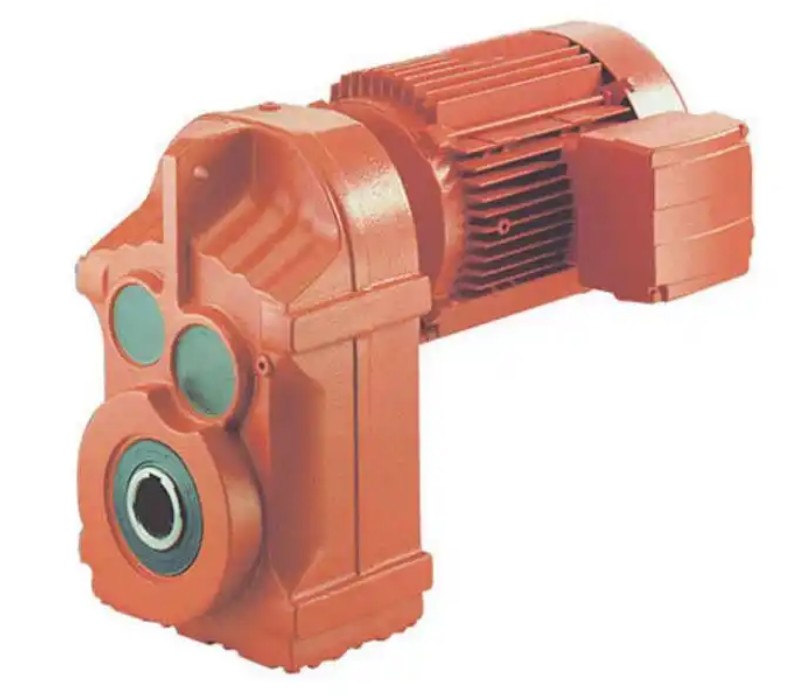
After cleaning the fuel tank of the FA47-34.8-1.5KW reducer, how to check whether there are any remaining impurities?
After cleaning the oil tank of the FA47-34.8-1.5KW reducer, checking for any residual impurities is a key step to ensure the safe operation of the equipment. You can systematically check according to the following methods:
1. Visual inspection of internal cleanliness
Use a strong flashlight or endoscope to carefully inspect the inner wall, bottom, corners, and oil interface of the fuel tank. Focus on observing for any residual old oil, sludge, metal debris, fibers, or sand particles. Under normal circumstances, the inner wall should be clean, free of attachments, and present a metallic or clean coating state.
2. White cloth/filter paper wiping method
Wipe the inner surface of the fuel tank, especially the bottom and low point areas, with a clean white lint free cloth or qualitative filter paper. If there is discoloration, particles or oil stains on the cloth surface after wiping, it indicates that there are still residual pollutants and it needs to be cleaned again.
3. Flushing oil inspection method (recommended)
After cleaning, a small amount of new lubricating oil or specialized flushing oil can be injected, and the circulation system (if equipped with an oil pump) can be started and run for 10-15 minutes before being discharged. Pour the discharged oil into a transparent container and let it stand for observation, or filter it through white filter paper:
(1) If there are black metal particles, yellow sand particles, or fibrous substances left on the filter paper, it indicates that there are still impurities inside;
(2) Can be combined with the filter paper diffusion method to determine: Drop 1-2 drops of oil onto the filter paper, let it stand for 24 hours, and normally form a uniform oil ring with clear edges; If there is central precipitation or uneven diffusion, it indicates contamination.
4. Magnetic plug and oil drain inspection
If the fuel tank is equipped with a magnetic drain plug, remove it and check the adsorption material. A small amount of fine black powder is a normal wear product, but if sheet metal shavings, iron slag, or non-magnetic particles (such as sand and gravel) are found, it indicates incomplete cleaning or internal damage.
5. Oil analysis (high-precision verification)
For critical equipment, it is recommended to take samples for particle counting and elemental analysis. According to the GB/T 14039 standard, if the pollution level exceeds NAS level 8, or if there is an abnormal increase in silicon (Si) and iron (Fe) elements, it can be determined that there are external dust or internal wear impurities.
6. Repeat cleaning until it meets the standard
If any residue is found during any of the above inspections, the cleaning process must be repeated, including soaking in cleaning agents, brushing, and drying with compressed air, until all inspection items are qualified.