Will the temperature exceeding 80°C cause the output shaft of the WPDA80-60-0.75 worm gear reducer to fracture
1、 The direct impact of 80 ℃ temperature on the output shaft
1. The output shaft of WP series reducers is usually made of 45 # steel or 40Cr quenched and tempered steel. 80 ℃ is far from reaching the annealing temperature of steel (significant strength decrease only occurs when ≥ 200 ℃). The tensile and yield strength of the material itself will not directly fail, and the shaft will not fracture directly due to temperature itself.
2. The industry allows the shell temperature of worm gear reducers to reach 85-90 ℃ for a short period of time. 80 ℃ belongs to the warning operation range and has not yet reached the dangerous temperature threshold.
2、 The core path of output shaft fracture indirectly induced by high temperature of 80 ℃
1. Lubrication failure causes additional load
At 80 ℃, the viscosity of L-CKE extreme pressure lubricating oil will significantly decrease, the oil film bearing capacity will drop sharply, the frictional resistance between the meshing surface and the bearing will increase sharply, and the actual torque transmitted by the output shaft will far exceed the design rated value. After long-term overload operation, the stress will exceed the allowable value of the material, ultimately leading to torsional fracture.
2. Stress concentration accelerates fatigue fracture
High temperature can accelerate the propagation of small machining defects in stress concentration areas such as shaft shoulders and keyways. In addition, the debris generated by the aging of rubber oil seals under high temperature can enter the bearing, causing the shaft to be stuck and the output shaft to be subjected to alternating impact loads, ultimately leading to fatigue cracks and fracture at stress concentration points.
3. Coaxiality deviation generates additional bending moment
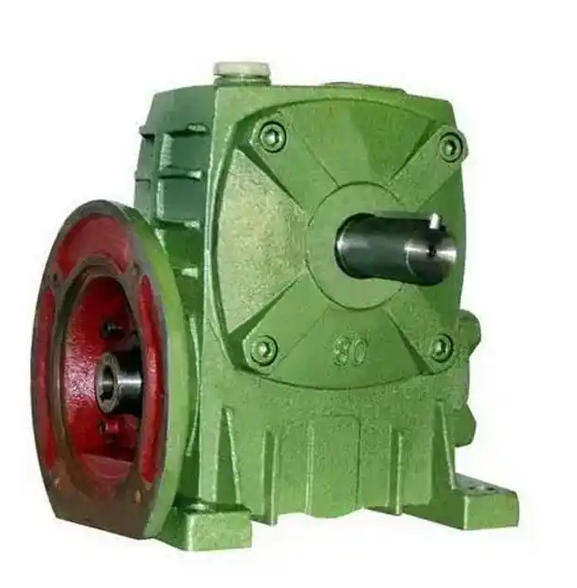
At 80 ℃, the thermal expansion of different materials in the box and shaft system is inconsistent. The originally qualified installation coaxiality will drift, and the output shaft will bear additional radial alternating bending moments, which can cause fatigue fracture after long-term operation.
3、 Key points for on-site disposal
1. At 80 ℃, the load must be immediately reduced, ventilation and heat dissipation must be strengthened, and the oil temperature must be controlled within 90 ℃ to avoid further temperature rise.
2. Synchronously check the oil level and quality. If there is oxidation and thinning of the oil, immediately replace it with high viscosity extreme pressure lubricating oil that meets the working conditions to avoid further deterioration of lubrication failure.
3. Focus on monitoring the vibration and noise changes of the output shaft. Once abnormal noise or sudden increase in vibration occurs, immediately stop the machine and check the status of the shaft system and bearings.