How to avoid overheating problems when selecting the FE series planetary reducer in continuous working mode
The key to avoiding overheating issues in the selection of FE series planetary gearboxes under continuous working mode (S1) is to conduct thermal power verification, rather than just preliminary selection based on torque and speed.
The planetary gearbox has a compact structure and a relatively small heat dissipation area. During 24-hour uninterrupted operation, if the heat generation rate is greater than the heat dissipation rate, it will cause the oil temperature to continue to rise, ultimately damaging the oil seal and causing the lubricating oil to fail, resulting in equipment shutdown.
The following are the key steps and considerations for avoiding overheating issues during selection:
1、 Core steps: Perform thermal power verification
This is the most crucial step in avoiding overheating under continuous working conditions. Many selection errors stem from neglecting this point.
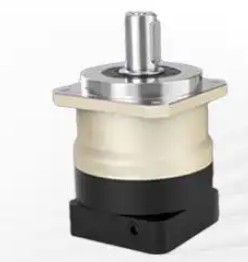
1. Calculate actual operating power: Based on the actual load torque and operating speed of the equipment, calculate the actual power that the reducer needs to transmit.
2. Refer to the thermal power curve: Request the thermal derating curve or thermal power rating chart of FE series products from the reducer supplier. This chart will clearly indicate the maximum input/output power that the gearbox is allowed to operate continuously without overheating at a specific ambient temperature (usually 20 ℃ or 40 ℃) and input speed.
3. Comparison and confirmation: Ensure that your actual operating power is less than the rated thermal power of the gearbox under the corresponding operating conditions. If the actual power exceeds the thermal power limit, even if the torque and speed are within the rated range, the gearbox will overheat.
2、 Other key selection considerations
In addition to thermal power verification, the following factors also directly affect the temperature rise and long-term stability of the gearbox:
1. Application service coefficient
For S1 continuous working system, a sufficiently large Service Factor should be selected. The service factor is the ratio of the rated power of the gearbox to the required power of the equipment. It acts as a "safety cushion" to absorb load fluctuations and impacts. For 24-hour continuous operation, the service factor is usually recommended to be no less than 1.25, and for loads with moderate impact, it needs to reach 1.5 or higher.
2. Working environment temperature
Specify the maximum ambient temperature for the installation location of the gearbox. If the ambient temperature exceeds the standard value (such as 40 ℃), the thermal power rating of the gearbox will decrease and it needs to be downgraded for use. This factor must be taken into consideration when selecting.
3. Lubrication method selection
Lubrication not only affects transmission efficiency, but also relates to heat dissipation.
Oil lubrication: It has better heat dissipation performance than grease lubrication and is more suitable for high load or continuous operation conditions.
Lubricating grease: It is usually designed for maintenance free use, but its heat dissipation capacity is limited under extreme working conditions.
When selecting, the most suitable lubrication scheme should be confirmed with the supplier based on the actual working conditions.
4. Installation method and heat dissipation space
The installation method of the reducer will affect its heat dissipation effect. Ensure that there is sufficient space around the installation location, allowing air to circulate freely and avoiding heat accumulation due to poor ventilation. Avoid installing the gearbox in enclosed spaces or near other heat sources.