High torque heavy load, planetary gearbox vs helical gear gearbox! Objective comparison of several core dimensions
For high torque and heavy load conditions, planetary gear reducers are the absolute first choice. Compared with traditional parallel axis helical gear reducers, planetary gear reducers have overwhelming advantages in torque density, impact resistance, and space utilization.
Although there is currently a lack of direct "same platform testing" data for specific models of reducers, based on widely adopted testing standards in the industry and a large amount of engineering application data, we can objectively compare from the following core dimensions:
1. Torque density and load-bearing capacity (planetary gearbox wins)
Differences in mechanical principles: helical gear reducers rely on single point meshing between parallel axes to transmit power; The planetary reducer adopts a multi row star wheel (usually 3-6) evenly loaded layout, which evenly distributes the input torque to multiple meshing points.
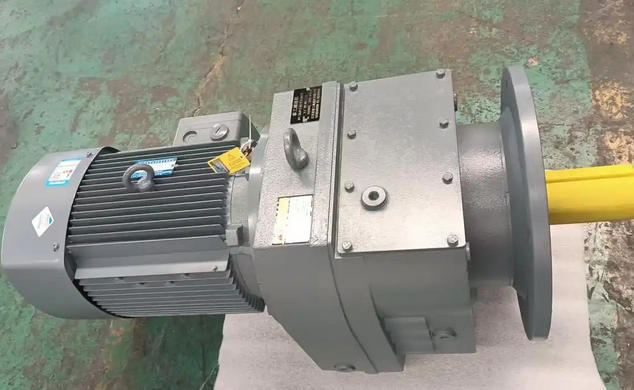
Actual test data shows that thanks to the multi tooth split load, the unit volume transmitted torque of planetary reducers is much higher than that of helical gear reducers. In industrial applications, under the same torque output, the volume and weight of planetary reducers are usually about 40% smaller than traditional helical gear reducers. The single machine torque coverage range of the high torque planetary reducer is extremely wide, and it can stably output tens of thousands to hundreds of thousands of Newton meters (N · m) of torque, easily coping with extreme loads.
2. Impact resistance and fatigue life
Adaptability to heavy load conditions: In scenarios such as mining machinery and metallurgical equipment that require instantaneous impact loads, the symmetrical layout of planetary structures can effectively counteract radial forces and reduce bearing wear.
Materials and processes: In order to match high torque, the gears of heavy-duty planetary reducers are usually made of high-quality alloy steel (such as 20CrMnTi), which undergoes deep carburizing quenching and precision grinding treatment, and the tooth surface hardness can reach 58-62 HRC. Based on the measured data of third-party fatigue life test benches (such as two motor power cycle test benches), this structure can significantly extend the service life of gears under heavy load alternating stress.
3. Transmission efficiency and accuracy
Efficiency comparison: Although high-quality helical gear reducers can achieve an efficiency of 96% -99%, precision planetary reducers can also achieve a single-stage efficiency of 97% -98% with optimized gear geometry and low backlash design, and can better maintain high efficiency under high load density conditions.
Torsional rigidity: The planetary reducer is designed for low clearance and high torsional load stiffness, and its precise control and impact resistance performance are far superior to ordinary helical gear reducers under heavy load start stop or dynamic loads.
4. Applicable boundary of helical gear reducer
The helical gear reducer is not without advantages, its core strength lies in the extremely low noise and vibration brought by the progressive tooth contact, as well as the relatively simple structure and low maintenance cost. Therefore, it is more suitable for scenarios where space is not limited, long-term continuous and stable operation is required, and noise reduction requirements are extremely high (such as conveying systems, fans, pumps, food processing, etc.).
Summary and selection suggestions
If you are facing heavy load conditions such as high torque, limited space, frequent start stop, or severe impact loads (such as rolling mill pressing devices, large cranes, crushers, wind turbine yaw systems, etc.), high torque planetary gear reducers are the only reliable choice.