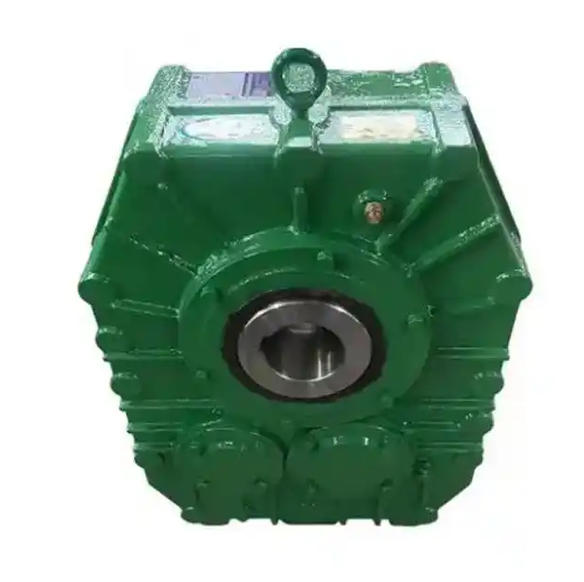
How to determine if the interior of ZJY212-85-20-S reducer is completely clean during cleaning
1、 Visual inspection
Open the observation window or end cover and shine a strong flashlight on the inside of the box:
1. The gear tooth surface, bearing raceway, and inner wall of the casing are free of obvious oil sludge, metal debris, and fiber impurities, revealing the matte luster of the metal itself.
2. There are no visible black oil stains or particle residues in the dead corners of the box, oil inlet, and threaded groove of the oil drain.
2、 Wipe verification confirmation
Use a completely fiber free pure white clean cloth to repeatedly wipe key areas such as the gear meshing surface, bearing end face, and inner wall of the box:
1. After removal, the surface of the cloth should be free of any black stains, yellow spots, or small particles, and should remain pure white throughout the entire process.
2. Gently touch the tooth surface and bearing raceway with clean fingers, with a smooth touch and no foreign object sensation that may cause discomfort to the hands.
3、 Oil cleanliness verification
Inject a small amount of new lubricating oil of the same model, manually rotate the input shaft 15 times, and allow the oil to fully flush all internal surfaces before completely releasing:
1. The released oil is clear and transparent, without turbidity, discoloration, precipitation or suspended impurities, and has almost no difference in appearance from new oil.
2. When conditions permit, use an 80 mesh filter to collect all the discharged oil, and there should be no visible particle residue on the filter, which meets the industrial grade cleaning standard.
4、 No load operation evidence
After completing all assembly, add new oil to the standard level and run at low speed for 5-10 minutes without load:
1. Throughout the entire operation, there is only a uniform gear meshing "buzzing sound" and no "rustling" or "sizzling" abnormal noise caused by impurities and friction.
2. The vibration value of the bearing seat is stable within 2.8mm/s, and there is no local abnormal temperature rise in the shell, indirectly proving that there are no residual impurities inside that interfere with the transmission.