Is the "broken shaft" of the dryer reducer a quality issue or improper use?
So, is this a quality issue with the product itself, or is it caused by improper daily use? In fact, the fundamental cause of most shaft breakage accidents is not the quality defects of the materials themselves, but rather a combination of factors such as stress concentration, poor installation, or improper operating conditions. Based on the actual situation on the industrial site, the main culprits behind the breakage of the gearbox shaft are as follows:
1. Poor installation alignment (the most common reason)
When there is a misalignment between the motor shaft and the input hole of the reducer (or the output shaft of the reducer and the working machine), the shaft will be forced to bear strong radial forces (bending moments) while transmitting torque.
Fatigue fracture mechanism: With the rotation of the shaft, the direction of this bending force changes 360 degrees every revolution. Under long-term action, the surface of the shaft will generate heat and cause micro cracks, gradually damaging the metal structure and ultimately leading to bending fatigue fracture.
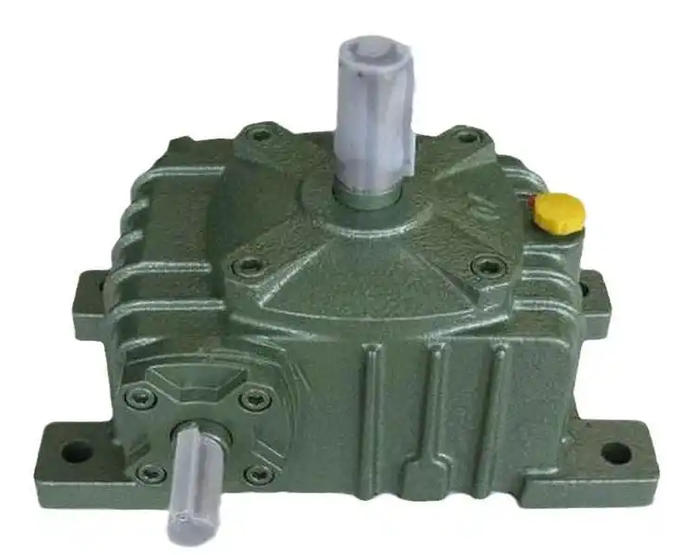
Fracture characteristics: This type of fracture axis usually has typical "beach pattern" features - the outer ring is bright and smooth (fatigue propagation zone), and the inner zone is dull and rough (final fracture zone).
2. The selection is too small or the torque margin is insufficient
Many users have a misconception when choosing a gearbox, thinking that as long as the rated output torque of the gearbox meets the requirements of regular operation, it is sufficient.
Overload risk: If the motor has strong overload capacity, when the material inside the dryer becomes stuck or the load suddenly increases, the motor will continue to increase its output, and the instantaneous torque may far exceed the bearing limit of the reducer, directly twisting the shaft.
Safety principle: The correct engineering selection principle is that the maximum working torque must be less than twice the rated output torque of the gearbox to cope with unexpected situations.
3. Impact load and frequent start stop
When starting, emergency stopping, reversing or handling large inertia loads, the dryer will generate huge dynamic impact loads.
This instantaneous torque peak will cause severe stress concentration in key slots, shaft shoulders, and other areas. If there is already minor fatigue damage to the shaft, a single strong impact load may become the last straw to crush the camel, causing the shaft to fail instantly.
4. Manufacturing and heat treatment defects (quality issues)
Although improper use is the main cause, defects in the manufacturing process can also lay hidden dangers:
Improper heat treatment: The surface of the shaft usually requires high-frequency or medium frequency carburizing treatment to improve hardness and wear resistance. If the process does not meet the standards (such as hardness far below the design requirements), the fatigue resistance of the shaft will be significantly reduced.
Stress concentration during machining: If there are obvious tool contact marks left when machining the bottom of the keyway, the relief groove, or the transition fillet, these small defects can easily become the source of fatigue cracks.