What precautions should be taken when measuring the torque of non-standard reducers in practice
The core precautions for actual torque measurement of non-standard reducers are as follows:
1、 Pre selection and working condition verification
1. Distinguish torque types and eliminate mixed testing
Differentiation: rated continuous torque, peak impact torque, starting stalling torque, output static torque; Non standard reducers often do not have standard nameplate parameters, and it is necessary to first clearly measure whether it is the "operating torque" or the "ultimate failure torque".
2. Match speed and reduction ratio
Accurately verify the actual reduction ratio and input/output rated speed before actual testing; Torque and speed are strongly correlated (the lower the speed under constant power, the greater the torque). It is strictly prohibited to measure torque at excessive speed to avoid sensor/gearbox damage.
3. Check the installation form and force direction
There are many non-standard flanges, hollow shafts, expansion sleeves, and double output shaft structures. It is confirmed that the torque force is pure torsion, without radial force or additional axial tension/top force; Eccentric installation and pulley side pulling can directly distort torque data and burn bearings.
2、 Key to Sensor and Equipment Installation
1. Reasonable margin for sensor range
It is recommended to measure the torque within the range of 30% to 70% FS of the sensor; Measure impact/locked rotor torque, with a range at least 1.5-2 times larger to prevent overload and sensor explosion; It is strictly prohibited to use small ranges to make up for non-standard high torque.
2. Coaxiality+strict control over the center
High precision alignment between the torque sensor and the input/output shaft of the gearbox, with an elastic coupling selected for buffering and reducing eccentric stress; Eccentricity greater than 0.1mm will generate additional bending moments, virtual high torque, large fluctuations, and also wear out oil seals and gears.
3. Fixed anti loosening and anti interference
Rigid reinforcement of reducer feet and brackets to prevent shaking and displacement during testing; Pipelines and cables should not rub against the rotating shaft to avoid frictional resistance being included in the torque; The hollow shaft/expansion sleeve must be locked in place without slipping (slipping will result in a smaller measurement).
4. Wiring and Grounding
The torque signal line should be shielded and grounded, and kept away from the frequency converter and motor power lines; Non standard on-site variable frequency interference is significant, and without shielding, data drift and hop count may occur.
3、 Test process operation specifications
1. Empty load → light load → full load gradually
First, run the temperature and break in for 3-10 minutes without load, and record the friction torque without load (non-standard gear clearance and bearing resistance are high, and the no-load torque cannot be ignored); Further increase the load step by step, and it is strictly prohibited to start the machine directly at full load/locked rotor.
2. Read again under stable working conditions
Continuous operating torque: Collect data after the speed, temperature, and current have stabilized; Impact torque/starting torque: High frequency sampling captures peak values, cannot read steady-state values.
3. Temperature monitoring
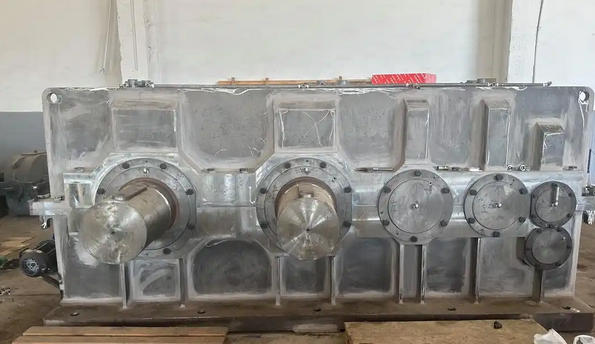
There is no standard for heat dissipation of non-standard reducers, and oil temperature/housing temperature is monitored during testing; High temperatures can cause lubricating oil to become thinner, friction torque to decrease, and gear strength to weaken. The torque data at high temperatures cannot be used as the rated value at room temperature.
4. No fault testing allowed
Stop the machine immediately when there is abnormal noise, oil leakage, jamming, or gear tooth breakage; The torque fluctuation in the fault state is extremely large, with no reference value, and it can completely damage the gearbox.