Analysis and Solution Strategies for Heating and Leakage Problems of Worm Gear Reducer
In order to improve its transmission efficiency, non-ferrous metals are usually used to make worm gears when manufacturing worm gear reducers. This is because non-ferrous metals have good wear resistance and self-lubricating properties, which can reduce energy loss during the transmission process to a certain extent. The worm gear is made of relatively hard steel, and the high strength and good rigidity of the steel can ensure that the worm gear is not easily deformed when subjected to large torque, thereby ensuring the stability and accuracy of the transmission.
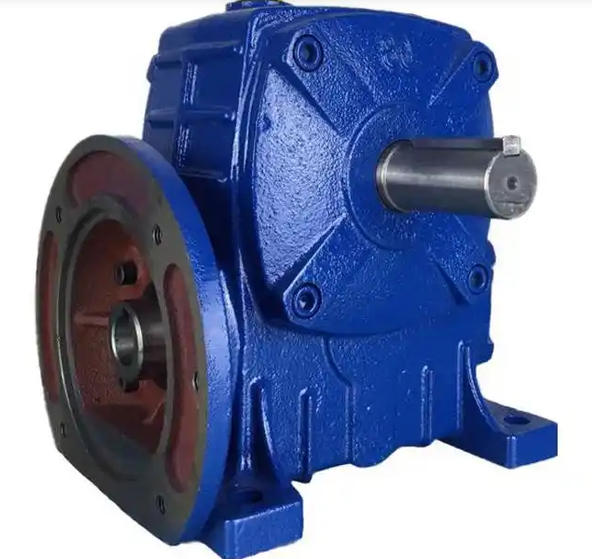
Worm gear reducer. jpg
However, there are also some issues that cannot be ignored during the operation of worm gear reducers. Due to its use of sliding friction transmission, the relative sliding between the worm wheel and worm gear generates a large amount of heat during operation. As time goes by, this heat accumulates continuously, causing the temperature inside the gearbox to continue to rise. The various components and sealing parts of the gearbox will undergo thermal expansion when heated. However, there are differences in the thermal expansion coefficients of parts made of different materials. Worm gears made of non-ferrous metals and worm gears made of steel have different degrees of thermal expansion, and the thermal expansion of sealing components is also different from that of metal parts. This difference in thermal expansion can cause the originally tight fitting relationship between the mating surfaces to be broken, resulting in gaps. At the same time, as the temperature increases, the viscosity of the oil will become thinner. The oil, which originally had good sealing and lubricating properties, becomes more fluid after becoming thinner, making it easier for it to leak out from the gaps caused by thermal expansion differences.
After extensive practice and research, it has been found that there are four main reasons for the heating and leakage of worm gear reducers:
In terms of material matching
Whether the material combination of worm gear and worm gear is reasonable is a key factor. Different combinations of non-ferrous metals and steel have varying coefficients of friction and wear resistance. If the material is not properly matched, excessive friction will be generated during the transmission process, leading to more heat generation. For example, the hardness mismatch between certain non-ferrous metals and steel can lead to excessive wear during long-term sliding friction, which not only reduces transmission efficiency but also exacerbates heating and increases the risk of leakage. Studies by scholars have shown that inappropriate material combinations may increase the heat generation power of reducers by 20% -30%, greatly increasing the possibility of leakage.
Surface quality of meshing friction surface
The surface quality indicators such as roughness and flatness of the meshing friction surface have a significant impact on heat generation and leakage. If the surface roughness is large, the actual contact area between the worm gear and worm gear will decrease during the meshing process, the pressure per unit area will increase, and the friction force will also increase accordingly, thereby generating more heat. Moreover, rough surfaces are prone to storing impurities and wear particles, which can further intensify friction, damage the integrity of the oil film, and lead to oil leakage. According to relevant experimental data, for every increase in surface roughness by one level, the heating power may increase by about 10%.