What are the common faults of the WH series worm gear reducer
1、 Overheating and oil leakage faults
The core manifestation of overheating and oil leakage faults is that the temperature of the casing exceeds 80 ℃, and there is oil leakage and seepage at the shaft end and the joint surface of the casing. In severe cases, it is accompanied by smoke and a burnt smell of lubricating oil.
Typical causes of overheating and oil leakage faults include high heat generation due to sliding friction, excessive oil level filling, poor heat dissipation during vertical installation, high pressure inside the box caused by blocked ventilation holes, and aging and failure of seals leading to leakage.
2、 Worm gear abnormal wear fault
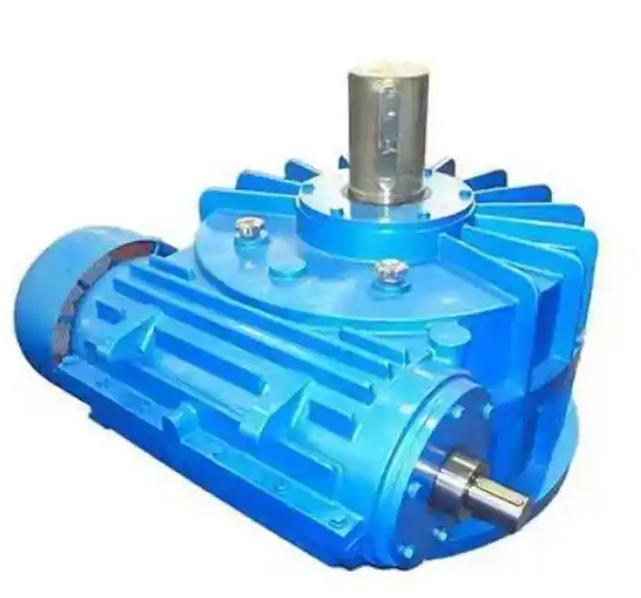
The core manifestation of abnormal wear and tear of the worm gear is pitting, scratching, and sticking on the tooth surface of the worm gear, significant reduction in tooth thickness, continuous decrease in transmission efficiency, and insufficient output torque.
Typical causes of abnormal wear and tear of worm gears include long-term overload operation, incorrect selection of lubricating oil/deterioration of oil quality, excessive deviation of meshing clearance during assembly, and the invasion of dust and impurities into the box, resulting in abrasive wear.
3、 Abnormal noise and noise
The core manifestation of abnormal noise and noise: sharp whistling, dull impact sound or periodic abnormal noise occur during operation, and the noise is significantly higher than the initial operating state of the equipment.
Typical causes of abnormal noise and noise: improper clearance between worm gears and worm gears, excessive clearance and damage to bearings, insufficient lubricating oil causing dry friction, and metal debris and foreign objects mixed into the box.
4、 Vibration exceeding the standard fault
The core manifestation of vibration exceeding the standard fault is that the overall vibration speed of the machine exceeds 7.1mm/s, and there is obvious vibration sensation in the anchor bolts and coupling parts, accompanied by loose connecting components.
Typical causes of vibration exceeding the standard: insufficient installation foundation stiffness, excessive shaft alignment deviation, excessive meshing clearance caused by wear of worm gear teeth, and failure of dynamic balance of rotating components.
5、 Bearing damage fault
Core manifestations of bearing damage faults: abnormally high temperature in the bearing area, periodic abnormal noise during operation, and in severe cases, output shaft jamming and inability to rotate.
Typical causes of bearing damage faults: alternating cold and hot lubricating oil produces condensed water, leading to oil emulsification and bearing corrosion and pitting; Improper tapping and excessive pre tension during assembly can lead to bearing sintering due to long-term overload.
6、 Transmission jamming and failure fault
Core performance: The output shaft rotates with lag and uneven resistance, and in severe cases, it is completely locked and unable to rotate, resulting in motor overload tripping.
Typical causes: severe adhesion and biting of the worm gear teeth, cracking and jamming of the bearing cage, and large foreign objects falling into the box and jamming the meshing pair.