Cast iron casing and precision gears: the core process determining the durability of rice mill reducers
1、 Cast iron box: the cornerstone for stable support, shock absorption and noise reduction
The box is the support and positioning base of the transmission parts. The reducer of the rice mill usually adopts a split cast iron box, and its durability is mainly reflected in the following aspects:
High quality material selection: Under normal working conditions, the gearbox body of the rice mill is often cast from gray cast iron (such as HT250) or ductile iron (such as QT500-7). This type of material not only has excellent casting performance and low cost, but more importantly, it has excellent vibration damping and wear resistance, which can effectively absorb the periodic impact load generated by gear meshing and reduce operating noise.
Eliminating internal stress treatment: After casting, there are often significant residual stresses inside the box body. If not treated, it is prone to warping and deformation during subsequent mechanical processing or long-term heavy load use. Therefore, stress relief treatment such as natural aging or vibration aging must be used to ensure the dimensional stability and long-term rigidity of the box.
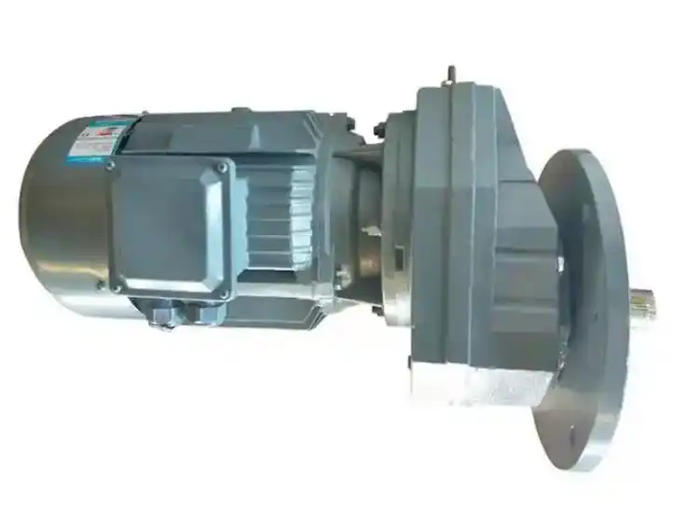
High precision machining and sealing: The machining accuracy of the bearing seat hole directly affects the transmission efficiency and bearing life. It is usually required that the accuracy is not lower than IT7 level, the surface roughness Ra is ≤ 1.6 μ m, and the holes on the same axis need to be drilled at once to ensure coaxiality. At the same time, the dividing surface of the box needs to be processed with sealing grooves and matched with sealant, combined with labyrinth or lip shaped sealing rings, to prevent dust from entering the rice milling workshop and lubricating oil leakage.
2、 Precision gears: the core of efficient transmission and fatigue resistance
When processing rice, the load of the rice mill fluctuates, which places extremely high demands on the impact resistance and wear resistance of the gears. The durability of precision gears depends on the following processes:
High strength materials and heat treatment: The mainstream material for industrial reducer gears is alloy carburizing steel (such as 20CrMnTi). By using the carburizing quenching+low-temperature tempering process, the surface hardness of the gear can reach 58-62HRC, with extremely strong wear resistance and contact fatigue strength; At the same time, the core maintains high toughness to resist the impact load during rice milling and prevent tooth breakage.
Precision gear grinding and shaping process: High precision gears require fully automatic gear grinding and tooth profile shaping (such as drum shaping) to eliminate machining marks and heat treatment deformation. This can not only stabilize the gear accuracy at 5-6 levels, reduce backlash, but also optimize the tooth contact area, gradually bite the teeth, and significantly reduce the impact vibration and noise during meshing.
Surface strengthening treatment: For heavy-duty or frequent start stop rice milling machine conditions, shot peening can also be applied to the tooth root, which can significantly improve the bending fatigue life of the gear (up to 70% increase), thereby extending the overall service life of the reducer.