Comparison of common types of crane reducers! How to choose planets, hard tooth surfaces, and worm gears?
1. Crane planetary reducer: The core advantages are small size, high torque, high transmission accuracy, and compact structure. Under the same torque, the volume is more than 30% smaller than traditional reducers, with extremely strong impact resistance and the ability to withstand 2-3 times the instantaneous load during start stop moments. It is mainly suitable for tower cranes, intelligent lifting equipment, and high-precision lifting scenarios. The disadvantage is that it requires high processing accuracy and high cost.
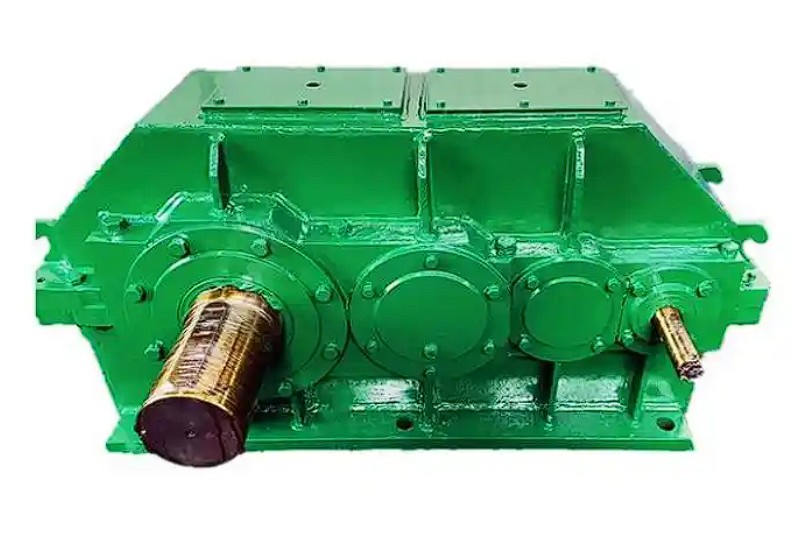
2. Hard toothed cylindrical gear reducer (QY/QJY series): This is a universal standard for bridge and gantry cranes, and also the most widely used model in the market. The gears have undergone high-frequency quenching treatment, resulting in high hardness, wear resistance, stable load-bearing capacity, high cost-effectiveness, and simple maintenance. They are suitable for conventional industrial plants and construction site lifting operations, and the only shortcoming is that their compactness is not as good as planetary gearboxes.
3. Worm gear reducer: The biggest feature is its self-locking function, large transmission ratio, low operating noise, which can prevent heavy objects from falling and has high safety. But the transmission efficiency is low, the wear is fast, and it is not resistant to heavy loads. It is only suitable for small light load cranes and auxiliary lifting equipment, and is not suitable for large heavy load continuous operations.
In summary, selecting planets with high precision for heavy loads, selecting hard tooth surfaces for conventional general use, and selecting worm gears and worms for safety for small light loads require precise matching to balance efficiency and cost.