Gear reducer vs cycloidal pinwheel reducer: How to choose a rewinding machine
1、 Core Performance Comparison: Gear Reducer vs Cycloid Needle Wheel Reducer
1. Transmission principle and impact resistance
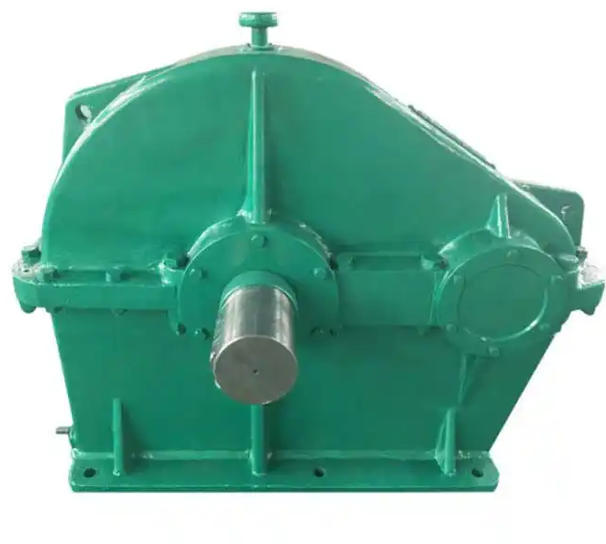
Gear reducer: Based on the traditional gear meshing principle, reduction is achieved through the combination of large and small gears. Its structure is relatively simple, and maintenance and repair are relatively convenient.
Cycloid pinwheel reducer: It adopts a special meshing method between the cycloidal pinwheel and the cylindrical gear shell, forming a rolling friction state with multiple teeth in contact at the same time. This structure gives it extremely strong impact resistance, overload resistance, and minimal inertia moment, making it very suitable for frequent start stop and forward/reverse rotation of rewinding machines.
2. Transmission accuracy and backlash (return clearance)
Gear reducer: Ordinary gear reducers have a large backlash. If the rewinding machine has extremely high requirements for tension control and positioning accuracy, a high-precision planetary gear reducer should be selected, whose backlash can be controlled within a very small range (such as ≤ 3 arc minutes or even lower), but the cost is relatively high.
Cycloid pinwheel reducer: Although it runs smoothly and has low noise, its overall accuracy is relatively low, making it more suitable for low-speed heavy-duty scenarios where positioning accuracy is not demanding.
3. Transmission efficiency and volume
Gear reducer: High transmission efficiency (usually above 90%), suitable for high-speed, continuous operation scenarios.
Cycloid pinwheel reducer: The single-stage transmission efficiency is usually between 90% and 95%. Its biggest advantage lies in its compact structure, small size, and light weight (which can reduce the volume by 1/2 to 2/3 compared to ordinary cylindrical gear reducers), making it very suitable for situations where the installation space inside the rewinder is limited.
2、 Four step selection method for rewinding machine
1. Clearly define the load type and operating conditions
The rewinder generates different torque demands during startup, acceleration, deceleration, and load changes. It is necessary to calculate the rated torque and peak torque of the equipment, and confirm the daily operating time, starting frequency, etc. For rewinding machines with frequent start stop and large load fluctuations, the impact resistance advantage of cycloidal pinwheel reducers is more obvious.
2. Accurately calculate torque and speed ratio
Torque calculation: It is not only necessary to look at the motor power, but also to calculate the actual torque at the output end. It is recommended to select the rated torque by multiplying the load torque by a safety factor of 1.2~2.0 to avoid equipment damage caused by instantaneous overload.
Speed ratio determination: Speed ratio=Motor input speed ÷ Load required output speed. A reasonable speed ratio can enable the motor to operate in the optimal speed range, while meeting the speed, torque, and positioning requirements of the rewinder.
3. Evaluate accuracy and rigidity requirements
If the rewinder belongs to high-precision automation equipment and is extremely sensitive to tension fluctuations and positioning errors, high-precision planetary gear reducers or RV reducers should be given priority consideration; If the main pursuit is high torque, impact resistance, and compact installation, and the requirements for micrometer level positioning are not high, the cycloidal pinwheel reducer is a more cost-effective choice.