
Four Sea Ltd
sales@reducersgearboxes.com
sales@reducersgearboxes.com

The QJR-D400-20-2C is a heavy-duty gear reducer. Its peripheral components cover mechanical assemblies including bearings, seals and couplings, alongside matched drive motors, lubrication units and cooling systems. Excess operating temperature may trigger cascading damage to these parts, detailed as below:
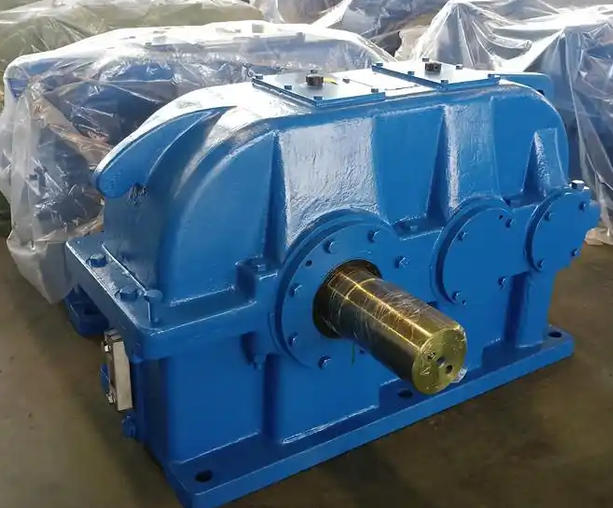
Coupling failure: High heat induces thermal expansion of the gear reducer housing, which disrupts the original alignment of the coupling. Elastic coupling elements like rubber pads suffer thermal aging and embrittlement, losing vibration damping capacity or even fracturing. For metal diaphragm couplings, high temperature reduces diaphragm toughness and may initiate cracks. Under extreme thermal conditions, coupling bolts can loosen or fracture, cutting off power transmission. Housing and fastener deformation & loosening: The reducer housing is generally cast from grey cast iron. High temperatures release residual internal stress, causing warpage on mating surfaces and degraded sealing performance. Bolt preload also drops markedly under heat. For standard fasteners such as M10 bolts, preload can fall by approximately 15% with every 100 ℃ temperature rise. Sustained high operating temperature loosens bolts and worsens gearbox oil leakage.
Degraded lubrication system performance: High temperature accelerates gear oil oxidation; the oxidation rate roughly doubles with each 10 ℃ rise in oil temperature. Oxidized lubricant produces acidic compounds, sludge and varnish deposits that clog oil galleries. This blocks normal oil supply and corrodes gear and bearing contact surfaces. In addition, oil viscosity drops significantly at high temperature. The resulting lubricant film becomes too thin to sustain heavy-load lubrication requirements.
Name: Hu Bo
phone:+8618881888393
Whatsapp:+8618881888393
Email:sales@reducersgearboxes.com
Add:No. 10 Xiyuan Road, Hangzhou City, Zhejiang Province, China