What safety hazards can be caused by high or low oil level in XWD cycloidal pinwheel reducer
1、 Low oil level (lack of oil) safety hazard
1. Sudden jamming and shutdown of the gearbox, leading to production accidents
Lubrication failure, rapid wear of bearings, cycloidal gears, and column pins, and sintering of the shaft; The device suddenly freezes during operation.
Sudden stoppage of loads such as conveyor lines, mixers, and lifting equipment can easily cause material accumulation, belt tearing, and workpiece impact, posing a risk of mechanical injury.
2. Parts shattered, foreign objects flying out and injuring people
Lack of oil and dry friction cause cycloidal gear and needle teeth to break, and metal fragments to collide at high speed inside the shell; In extreme cases, the shell cracks and metal fragments splash outwards, causing mechanical injury to personnel.
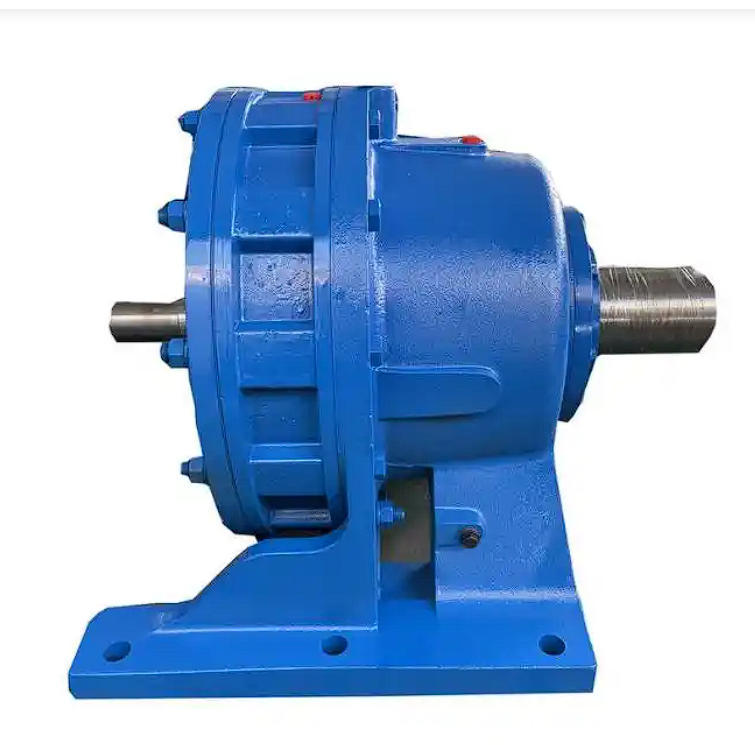
3. Motor overload and burnout, electrical fire risk
The resistance of the reducer continues to increase, causing a surge in motor current, overload, and stalling. The motor winding may overheat and cause insulation breakdown, posing a risk of short circuit and fire.
4. Risk of equipment loss of control
The failure of the reducer in lifting, flipping, and mixing equipment may result in the sliding of the load and accidental rotation of the tank, leading to major equipment safety accidents.
2、 High oil level (excessive refueling) safety hazard
1. Continuous oil leakage poses a risk of on-site slippage
Lubricating oil seeps out from the shaft seal and end cover and flows onto the ground and operating platform, forming an oily and slippery surface. Operators are prone to slipping and falling while walking; Dropping onto the conveyor belt and electrical control box below can also contaminate the equipment.
2. The oil temperature rises sharply, posing a risk of spontaneous combustion of the oil
High oil mixing loss and continuous exceeding of oil temperature; High temperature accelerates the cracking and carbon deposition of lubricating oil. Under high-temperature working conditions, oil and gas accumulate, posing a risk of ignition when encountering welding sparks or high-temperature surfaces.
3. Oil seal failure, large amount of fuel injection
The internal pressure rises, the oil seal opens, and a large amount of lubricating oil sprays out instantly. High speed splashing oil and grease contact with motor terminals can easily cause leakage and short circuits; Spraying oil mist can also affect visibility and interfere with on-site operations.
4. Decreased transmission efficiency and long-term overload operation of the motor
The resistance of oil stirring increases, and the motor continues to operate at full load or even overload, causing the motor to heat up, accelerate aging, and increase the probability of motor failure.
3、 Common derived safety hazards (common consequences of abnormal oil level)
Unplanned sudden shutdown of equipment: disrupts the rhythm of the production line, and the emergency response process is prone to misoperation, leading to safety accidents;
Hidden development of faults: In the early stage, there are only abnormal noises and heating, which are not easy to detect, and hidden dangers accumulate for a long time, leading to the sudden outbreak of malignant faults;
Pollutant diffusion: Oil leakage pollutes products and raw materials, resulting in material scrap and derivative disposal risks.