Is the effect of temperature on the noise and vibration of different types of non-standard reducers the same
The impact of temperature on the noise and vibration of different types of non-standard reducers varies, with the core differences coming from gear/bearing materials, lubrication characteristics, structural forms, sealing and heat dissipation designs. The amplitude of changes caused by temperature rise, fault triggering points, and vibration/noise dominant mechanisms are significantly different.
The core of temperature change changes three key elements, which in turn affect vibration and noise:
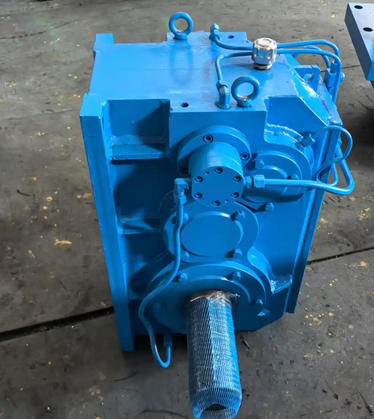
1. Sudden changes in lubricating oil characteristics: low temperature → viscosity surge, poor fluidity, insufficient oil film thickness, increased friction coefficient, dry friction of gears/bearings, increased impact vibration, and sharp noise; High temperature → sudden drop in viscosity, thinning/rupture of oil film, boundary friction, direct metal contact, increased wear, increased vibration amplitude, dull and sustained noise.
2. Thermal expansion and contraction lead to offset of fitting clearance: gear tooth backlash, bearing clearance, coaxiality/parallelism between the housing and the shaft system deviate from the design value with temperature - clearance is too small → jamming, compression, high-frequency vibration, whistling; Excessive gap → impact, meshing impact, low-frequency vibration, impact noise.
3. Material stiffness and fatigue changes: High temperature reduces metal elastic modulus, increases creep, intensifies gear/shaft/box deformation, and reduces meshing accuracy; Low temperature increases the brittleness of materials, making them prone to microcracks under impact loads, resulting in abnormal vibrations and noise.