What are the differences in the applicable scenarios between soft tooth surface reducers and hard tooth surface reducers
There is no absolute difference between soft tooth surface and hard tooth surface reducers, the core difference lies in the "adaptation difference". Their applicable scenarios are mainly determined by load size, operating speed, accuracy requirements, and budget costs.
In order to give you a more intuitive understanding of the difference between the two, the following is a detailed comparative analysis:
1、 Comparison of core differences
2、 Detailed division of applicable scenarios
1. Soft tooth surface reducer: focusing on "cost-effectiveness" and "light load"
The gears of soft tooth surface reducers are usually only subjected to tempering or normalizing treatment, and the process is simple. It is very suitable for civilian or auxiliary equipment that is cost sensitive, load stable, and has no strong impact.
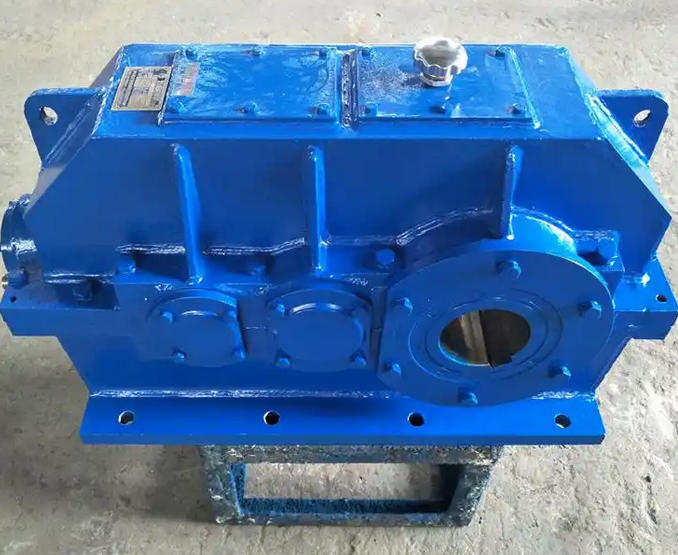
Light industry and packaging: food packaging machines, textile printing and dyeing machinery, pharmaceutical filling lines (with relatively low operating noise).
Ordinary conveying equipment: grain conveyor, light belt conveyor, storage and logistics AGV car.
Small mixing equipment: A small mixer that does not require high precision and lifespan.
Ordinary machine tool auxiliary transmission: an auxiliary mechanism that does not require high transmission accuracy.
2. Hard tooth surface reducer: focusing on "high performance" and "heavy load"
The gears of the hard tooth surface reducer are made of high-quality alloy steel and undergo carburizing quenching and precision grinding processes, resulting in extremely high tooth surface hardness. It is designed for harsh working conditions, high power density, and long-term uninterrupted operation.
Heavy industry: mining crushers, ore hoists, steel mills in the metallurgical industry, and large ball mills.
Lifting and transportation: port cranes, bridge cranes, large belt conveyors (capable of withstanding frequent start stop and high torque impacts).
Building materials and energy: rotary kilns in cement plants, pitch/yaw systems for wind turbines.
Precision and automation: spindle drive for CNC machine tools, high-precision automated production lines (with extremely high requirements for transmission accuracy and efficiency).