What is the impact of motor power on load matching of ZSC hard tooth surface gear reducer
The motor power has a decisive impact on the load matching of ZSC gear reducers. ZSC gear reducers are commonly used in heavy machinery such as cranes and winches. Improper power matching not only affects equipment operation, but also directly damages the reducer.
The specific impact is mainly reflected in the following two aspects:
1. The motor power is too low ("small horse pulling big car")
When the motor power is insufficient, in order to drive the rated load, the system will be forced to operate in an overloaded state, causing serious physical damage to the ZSC reducer:
Gear damage (plastic deformation or tooth breakage): When the motor cannot move the load (such as stalling), the instantaneous torque may reach 3-5 times the rated value. The gears inside the ZSC reducer will withstand impact forces far beyond the design value, which can easily cause the tooth surface to collapse (plastic deformation) or even directly break the teeth.
Sudden decline in bearing life: The enormous impact force can cause the contact stress between the bearing rollers and the raceway to exceed the material limit, resulting in "pitting" or "peeling". This will cause the design lifespan of the gearbox to plummet from the original 10000 hours to within 2000 hours.
Operation lag and accuracy decrease: When loaded, the speed will suddenly decrease, causing the transmission system to experience "lag" or "crawling", seriously affecting the smooth operation and positioning accuracy of the equipment.
2. Excessive motor power ("big horse pulling small car")
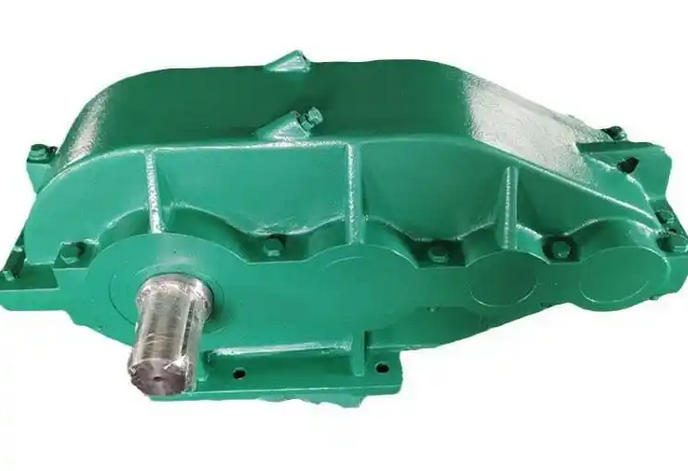
Although high-power motors can ensure the operation of loads, long-term "pulling small cars with big horses" not only wastes resources, but also brings hidden dangers:
Energy consumption surge: The operating efficiency of the motor will significantly decrease (possibly below 70%) at light loads (below 50% rated power). For example, using an 11kW motor to drive a load that only requires 5.5kW, the actual operating efficiency may decrease from 90% to 65%, resulting in a significant increase in electricity costs.
Early wear of gearbox: High power motors have a higher rated torque. If this excess torque is applied to the ZSC reducer for a long time, it will increase the impact load during gear meshing, damage the lubricating oil film, and cause the tooth surface to "stick" (direct metal friction). Meanwhile, excessive force can also easily cause deformation of the coupling between the output shaft and the load, leading to vibration and noise.