How to deal with frequent overload tripping of K series reducers during operation
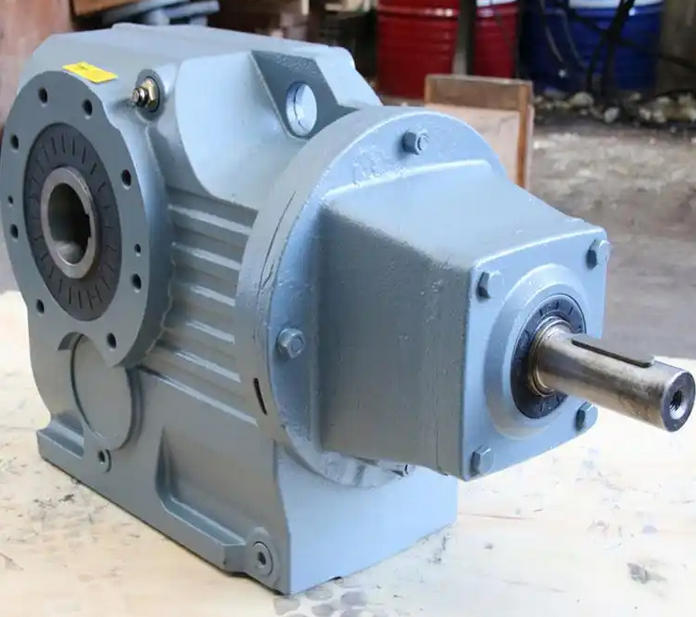
The series (usually K-series spiral bevel gear) reducer frequently experiences overload tripping during operation, which indeed greatly affects production progress. This is usually caused by three major reasons: abnormal mechanical load, improper electrical protection settings, or equipment failure.
You can investigate and process in the following order, from simple to complex:
1、 Electrical system troubleshooting (priority inspection)
Many times, tripping is not due to a faulty gearbox, but rather due to overly sensitive protection mechanisms or power supply issues.
1. Check the setting value of the thermal relay or circuit breaker: Check the rated current of the motor and confirm whether the setting current of the thermal relay or circuit breaker is too low. If the set value is lower than the rated current required for the actual operation of the motor, a slight load fluctuation will trip.
2. Check voltage stability: Measure whether the input voltage is stable. Low voltage can cause an increase in motor current to maintain power, leading to overload; Voltage phase loss (missing one phase in three-phase electricity) can also cause a sharp increase in current and rapid tripping.
3. Check motor insulation: Use a megohmmeter to measure the insulation resistance of the motor winding, and eliminate the possibility of excessive current caused by internal short circuits or moisture in the motor.
2、 Mechanical load and installation troubleshooting (most common reasons)
If the electrical parameters are normal, the problem usually lies in excessive mechanical resistance.
1. Check the lubricating oil (very critical):
Oil level and quality: K series reducers have high lubrication requirements. Check if the oil level is too low, causing dry grinding of the gears, or if the lubricating oil has not been replaced, deteriorated, or mixed with impurities for a long time, leading to an increase in viscosity and a sharp increase in operating resistance.
Oil type: Confirm whether the lubricating oil specified by the manufacturer (such as 220 # medium load industrial gear oil) has been used.
2. Check the coupling and alignment:
If a coupling is used between the reducer and the motor, or between the reducer and the working machine, check whether the coaxiality deviation is too large. Severe misalignment can generate significant radial forces, leading to bearing jamming or excessive load.
Check whether the elastic body of the coupling (such as plum blossom pad, nylon column pin, etc.) is worn or damaged, which may cause poor transmission.
3. Check the backend working machine:
Sometimes the problem is not with the gearbox, but with the equipment driven by the gearbox (such as mixers, conveyors, etc.). Check if the working machine is stuck, if the bearings are damaged, if the chain is too tight, or if foreign objects are stuck. You can try disconnecting the gearbox from the working machine and running the gearbox without load to see if it still trips.