How to determine the fault type of shaft mounted ZJY150-16-S reducer
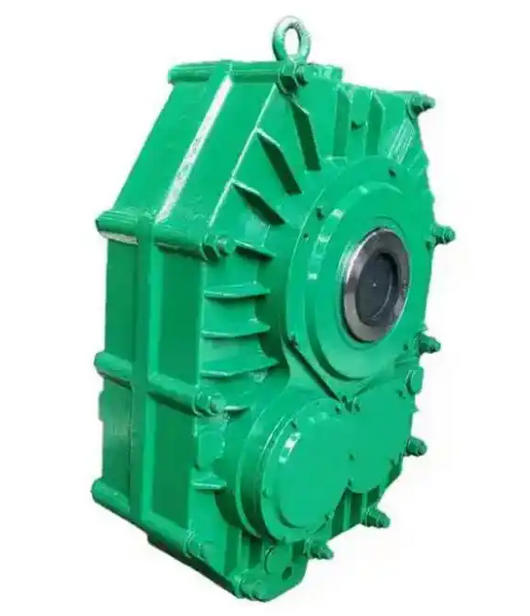
To determine the fault type of the ZJY150-16-S shaft mounted reducer, the core is to quickly locate the fault through six dimensions: listening to noise, measuring temperature, checking vibration, observing oil leakage, turning hand feel, and measuring performance, combined with its structural characteristics of shaft mounted suspension, hollow shaft, and with a check (S).
The six dimensional fault diagnosis method is as follows:
1. Listen to noise (most intuitive)
(1) Smooth and low humming sound: normal
(2) Periodic 'click/clack' impact sound
Fault: Gear wear, pitting, broken teeth, poor meshing
Feature: Increased sound during load/speed changes
(3) Sharp 'squeaking/whistling'
Fault: Bearing oil shortage, ball/raceway peeling off, loose bearing seat
(4) Dull "clanging" abnormal noise (with S model)
Fault: Internal wedge/roller damage in the backstop, one-way braking failure
(5) Sudden increase in noise
Fault: Loose installation, misaligned coupling, slipping expansion sleeve
2. Temperature measurement (infrared/tactile)
(1) Normal: Shell at 40-60 ℃, uniformly warm
(2) Overall over 70 ℃ (hot to the touch)
Fault: Overload, insufficient/deteriorated lubrication, low oil level, poor heat dissipation
(3) Localized overheating (at the bearing end cover/input shaft)
Fault: Bearing damage, tight assembly, foreign object intrusion
(4) Abnormal heating in the check valve area
Fault: Stuck reverse brake, worn friction plate, excessive one-way braking resistance
3. Check for vibration (feel/vibrometer)
(1) The whole machine shakes violently and feels numb when touched by hand
Fault: Loose foundation/pull rod, misaligned shaft, loose hollow shaft expansion sleeve
(2) High frequency vibration of bearing position
Fault: Bearing wear, excessive clearance, damaged cage
(3) Vibration increases significantly with load
Fault: Poor gear meshing, broken teeth, bent shaft
4. Check for oil leakage (high incidence of ZJY)
(1) Oil leakage at the input/output shaft end
Fault: Oil seal aging, journal wear, installation eccentricity causing excessive radial force
(2) Oil leakage at the joint surface of the box body
Fault: Sealing gasket failure, loose bolts, box deformation
(3) Spray oil at the breathable plug
Fault: High internal pressure, high oil level, blocked vent plug