5 common misconceptions about gear ratio selection for reducers! The motor overheating and broken teeth are all caused by the wrong choice
In the process of selecting a reducer, choosing the wrong speed ratio is the "culprit" that leads to motor overheating, tooth breakage, and even premature equipment scrapping. Based on practical engineering experience, the following are the 5 most common misconceptions and pitfalls in gear ratio selection for reducers:
Misconception 1: Believing that 'the larger the reduction ratio, the better the output torque'
Misconception One Truth: Blindly pursuing high speed ratios not only wastes costs, but also seriously damages equipment.
Misconception 1: Consequences:
Insufficient speed: Excessive speed ratio leads to low output speed, slow equipment operation, and inability to meet production pace.
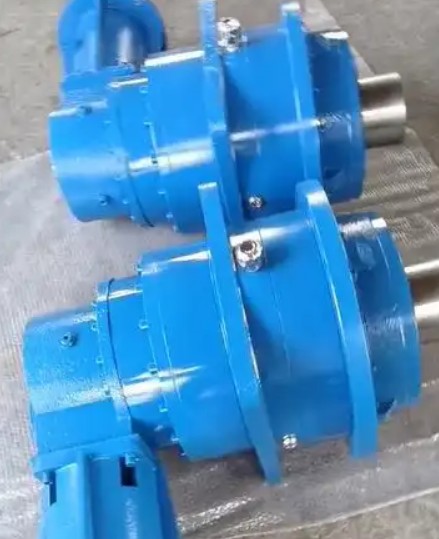
Torque Exceeding and Tooth Breakage: Although the theoretical torque is amplified, the actual calculated torque can easily exceed the bearing limit of the gear and bearing housing. Long term alternating loads can cause tooth wear and deformation, and even direct tooth breakage.
Decreased accuracy: A high speed ratio means an increase in the number of stages inside the reducer, resulting in a larger cumulative gap value, leading to a linear decrease in positioning accuracy and repeat positioning accuracy, which can easily cause shaking under precision working conditions.
Double increase in volume and cost: The body of the high-speed reducer is longer and heavier, which not only easily causes interference in installation space, but also makes the price more expensive.
Misconception 2: Only focusing on motor power, ignoring the precise matching of torque and speed
Misconception 2 Truth: Relying solely on motor power selection is the biggest misconception for beginners, which can easily lead to "small horses pulling big cars".
Misconception 2: Avoiding pitfalls: It is necessary to use formulas for torque conversion verification: the actual required torque is ≤ the rated torque of the reducer x the safety factor (usually taken as 1.5~2). If only matching based on motor power and ignoring the actual load torque demand, it will lead to long-term overload and overheating of the motor or damage to the gearbox.
Misconception 3: Calculating speed ratio directly based on the "maximum speed" of the motor
Misconception Three Truth: The maximum speed of the motor is only suitable for short-term acceleration or deceleration conditions.
Misconception Three Avoidance Pits: If the speed ratio is calculated based on the highest speed, it will result in a smaller speed ratio under rated operating conditions, leading to insufficient torque and causing the motor to be overloaded for a long time, resulting in overheating. The correct approach is to calculate the reduction ratio based on the rated target speed required by the equipment (reduction ratio=motor rated speed ÷ equipment required speed).
Misconception 4: Neglecting the loss of "transmission efficiency" and "thermal power"
Misconception 4 Truth: The transmission efficiency of the gearbox is not 100%, and there are thermal balance issues under high loads.
Misconception 4: Avoiding pitfalls:
When calculating the output torque, it must be multiplied by the transmission efficiency (such as planetary gearbox efficiency, which is usually 0.9~0.98). Neglecting efficiency can result in actual output torque being lower than the theoretical value, causing load lag or motor overload and overheating.
For equipment operating under continuous high load, thermal power verification is also required. Poor heat dissipation can lead to lubricant failure, high temperature rise, and accelerated equipment wear.