Daily maintenance tips for textile machine reducers! Do these things well and use for 3 more years without replacing the parts
Many textile factory reducers have a short service life, not due to product quality issues, but due to inadequate daily maintenance. A qualified textile specific reducer can be used stably for 5-8 years under normal working conditions, while models that lack maintenance will experience wear, oil leakage, and frequent malfunctions after 2-3 years. The textile workshop has a lot of dust, high humidity, 24-hour continuous operation, and harsh working conditions, which require more refined maintenance. Share simple and easy-to-use maintenance tips to easily extend equipment lifespan.
Firstly, regularly check the lubricating oil and strictly control the oil quality and level. Lubricating oil is the blood of the gearbox. When textile equipment operates continuously for a long time, lubricating oil is prone to high temperature deterioration and loss. It is recommended to check the oil level once a month to keep it between the standard markings. If the oil level is too low, it should be replenished in a timely manner. If the oil level is too high, excess grease should be drained in a timely manner. At the same time, special high-temperature and dust resistant lubricating oil for textile equipment should be selected, and the mixing of inferior oil products is prohibited to avoid lubrication failure and exacerbate gear wear. Replace the lubricating oil thoroughly every 6-12 months and clean the impurities in the oil tank.
Secondly, promptly clean the dust fibers to ensure equipment heat dissipation. Textile production produces a large amount of cotton wool, fibers, and dust, which are easily adsorbed on the reducer body, heat dissipation holes, and gaps. Long term accumulation can block the heat dissipation channels, causing high temperatures in the body, deterioration of lubricating oil, and possible infiltration into internal worn parts. It is recommended to clean the surface debris of the machine body before and after work every day, and thoroughly clean the residual fibers in the heat dissipation holes and gaps every week to keep the equipment clean and transparent.
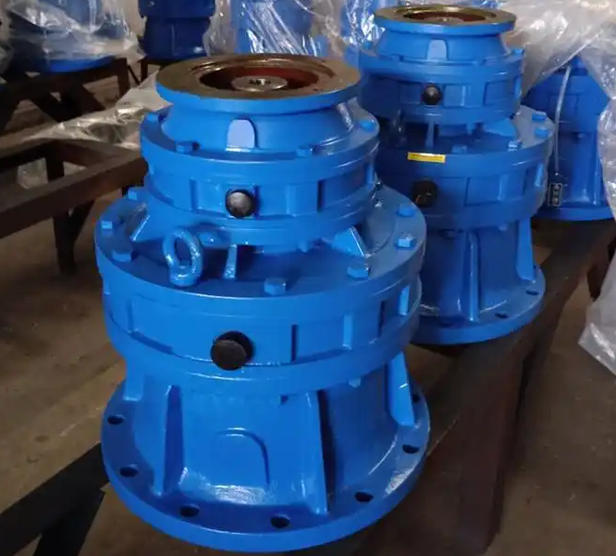
Thirdly, regularly inspect the sealing and fastening parts. The workshop has high humidity and dust, and the sealing components are prone to aging and failure, leading to oil leakage and dust ingress. Check the condition of oil seals and gaskets once every quarter, and replace them promptly if slight oil leakage, aging, or cracking are found; At the same time, check the fixing screws and installation bolts of the machine body. Long term vibration of the equipment can easily cause screws to loosen. Regularly tighten them to avoid transmission deviation and equipment abnormal noise.
Fourth, avoid long-term overload and frequent start stop. The textile machine reducer has a rated load. Long term overload operation and frequent start stop will significantly increase the impact wear of gears and bearings, accelerating equipment aging. During the production process, try to keep the equipment running at a constant speed, reduce ineffective start stop, eliminate overloaded production, and reduce equipment loss from the source.
Fifth, conduct regular shutdown inspections to identify hidden faults. When the production line runs continuously, many hidden faults are difficult to detect. It is recommended to arrange a short-term shutdown inspection once a month to disassemble and inspect the wear of gears, bearings, and key strips, check for internal impurities and potential jamming hazards, and deal with small problems in advance to avoid them escalating into major failures and causing downtime losses.
Maintenance is not about complexity, but about persistence. By doing the above points well, it can significantly reduce the failure rate of reducers, extend the service life of equipment, reduce replacement costs and downtime losses, and safeguard the stable production of textile enterprises.