Selection Guide for Textile Machine Reducer! Avoid these 5 misconceptions and avoid wasting money unnecessarily
Many textile factories encounter these problems: newly replaced reducers wear out in less than half a year, equipment shakes frequently, fabric damage increases, and maintenance downtime is frequent. Ultimately, it's not about poor product quality, but about mismatched selection. The selection of textile machine reducers should not be blindly based on price or power, but must be tailored to the working conditions and production needs of textile equipment. Practical selection strategy for textile industry masters, avoiding misunderstandings and making precise selections.
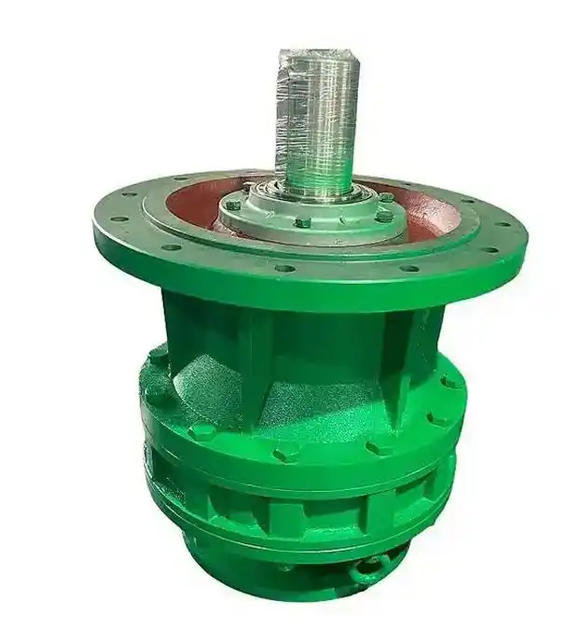
Misconception 1: Only focus on power and ignore transmission ratio. Many people only benchmark motor power when selecting models, ignoring the core transmission ratio. The working conditions of textile equipment vary greatly, and the required speed and torque of spinning machines, weaving machines, and printing and dyeing machines are completely different. For example, the 841 cycloidal pinwheel reducer with a large transmission ratio is suitable for low-speed and heavy-duty printing and winding equipment. If used on high-speed spinning equipment, there may be speed lag and power lag; The small transmission ratio model is suitable for high-speed processes, but when used in heavy-duty scenarios, it may result in insufficient torque and gear overload wear. The selection must be based on the required output speed of the equipment and matched with the corresponding transmission ratio.
Misconception 2: Universal reducers replace textile specific models. Ordinary industrial reducers have a simple structure and poor protection, and have not been optimized for the working conditions of textile workshops. The textile workshop has a lot of dust, high humidity, and fiber debris. Ordinary reducers are prone to dust ingress, jamming, and oil leakage. However, the JWF series textile specific reducers adopt sealed reinforcement, dust-proof, and anti fiber winding design, which is suitable for harsh working conditions in the workshop and can operate continuously for a long time. Their stability and durability far exceed those of general models.
Misconception 3: Ignoring load conditions and blindly choosing low-priced models. Textile equipment is divided into three working conditions: light load, medium load, and heavy load. The 24-hour continuous production line belongs to the heavy load working condition, and high-strength gears and wear-resistant material reducers must be selected. The low-priced thin reducer has low gear accuracy and poor toughness, and long-term heavy load operation is prone to gear tooth breakage and shaft core wear. It may seem cost-effective, but in reality, frequent replacement and downtime can result in higher overall costs.
Misconception 4: Ignoring installation methods and size adaptation. The structure of textile machine equipment is compact, and the reducer is divided into hollow shaft, solid shaft, horizontal and vertical installation forms. Before selecting, it is necessary to check the installation space, shaft diameter size, and output method of the equipment. If the size does not match, installation misalignment and transmission eccentricity may occur, leading to increased equipment vibration, rapid bearing wear, and in severe cases, direct damage to the host equipment.
Misconception 5: Only focus on price, without considering compatibility and after-sales service. Many small and micro enterprises prioritize low-priced miscellaneous brand reducers, which have substandard gear accuracy and large transmission errors, directly leading to uneven fabric patterns and skyrocketing defect rates. At the same time, there is a lack of professional after-sales service, which makes it difficult to quickly repair faults and prolongs downtime. It is recommended to prioritize selecting models that are specifically designed for textile use, suitable for working conditions, and have a reliable reputation, while also considering stability and after-sales support.
Summary: The core of selecting textile machine reducers is "working condition adaptation". Only by comprehensively selecting equipment type, load intensity, operating time, and installation size can frequent failures be eliminated, production costs be reduced, and production stability be guaranteed.