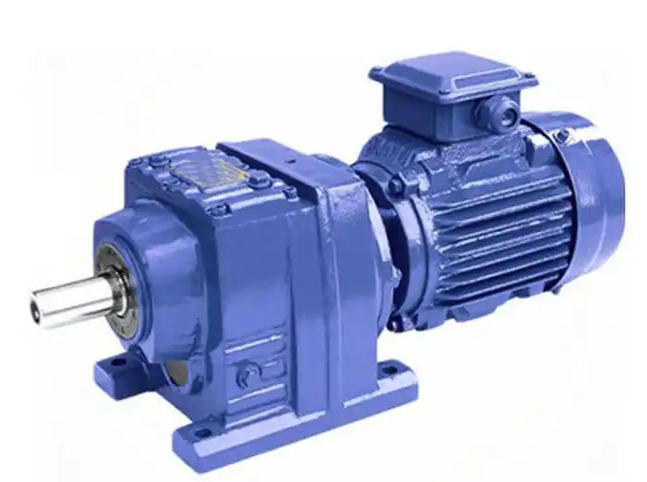
Methods for Verifying Adequate Internal Lubrication in R97-18.24-4KW Gear Reducer
To judge whether the internal lubrication of the R97-18.24-4KW gear reducer is adequate, three approaches shall be adopted together: static inspection under shutdown status, dynamic monitoring during operation, and lubricant quality analysis. The detailed methods are described below:
-
Static oil level inspection during shutdown
Shut down the equipment and allow the gear reducer to cool to ambient temperature, preventing hot oil spillage or inaccurate oil level readings. Clean oil contamination on the reducer housing surface and locate the oil sight glass or oil level plug.
For units fitted with an oil sight glass, check if the lubricant level sits between the upper and lower marked limits. The ideal condition is the liquid level at the midpoint of the scale. A level below the lower limit means insufficient lubrication; a level above the upper limit will trigger higher churning heat and raise the risk of oil leakage.
For reducers with an oil level plug, adequate lubrication is confirmed when lubricant slightly overflows the hole or aligns with the bottom edge of the hole after removing the plug. If no oil emerges from the hole and oil can only be touched by inserting a probe, the lubrication is insufficient.
Note: Ensure the reducer is mounted horizontally before inspection. Tilted installation will lead to incorrect oil level assessment.
-
Housing temperature rise and temperature difference monitoring during operation
Run the reducer under rated load for 30 to 60 minutes, then measure temperatures at multiple housing points using an infrared thermometer, focusing on the gearbox midsection and bearing end caps.
With adequate lubrication, temperature rise across all areas remains consistent. Housing temperature stabilizes between 40–60 ℃, and the temperature rise against ambient temperature does not exceed 40 ℃.
Insufficient lubrication increases friction resistance for gears and bearings, causing sharp local temperature spikes. The bearing end cap temperature will be markedly higher than other housing sections, with temperature rise exceeding 45 ℃ and a fast heating rate that fails to stabilize even after one hour of operation.
Besides, if the operating temperature rises obviously under identical working conditions when compared with historical data, insufficient lubrication can be confirmed after eliminating poor heat dissipation causes.
-
Operating noise and vibration monitoring
A properly lubricated gear reducer generates smooth, consistent gear meshing sound with no prominent abnormal noise or irregular vibration.
Inadequate internal lubrication deprives gear teeth and bearing rolling elements of complete oil film protection. Metal friction will produce hissing and dry-grinding noises, along with intermittent clanging impact sounds. Noise intensity grows as operating time increases.
A stethoscope placed against bearing end caps and housing sidewalls can easily tell abnormal friction sounds apart from normal meshing noise. Meanwhile, use a vibration meter to test housing vibration amplitude. Insufficient lubrication pushes vibration readings beyond equipment specifications and creates disordered vibration frequencies. After ruling out coupling misalignment and base bolt loosening, such friction-induced vibration indicates inadequate lubrication.