How to solve the problem of weak output, slipping and spinning of milling machine reducer
The occurrence of weak output, slipping, and loss of rotation (step loss) in milling machine reducers is usually caused by problems in mechanical transmission, electrical control, and load matching. You can gradually investigate and solve the problem according to the following logic:
1、 Mechanical transmission part inspection
Mechanical failure is the most direct cause of power transmission interruption or attenuation.
1. Check if the connecting components are loose or worn
Coupling and key connection: Check whether the coupling between the motor and the reducer, as well as the flat key or spline between the output shaft and the load, are loose, worn, or even broken. If the keyway is severely worn, power cannot be effectively transmitted, resulting in slipping or loss of rotation. Tighten the coupling bolts and replace with new keys of the same specification and repair the keyway if necessary.
Tighten bolts: Check if the connecting bolts of the gearbox body, foundation, and internal gear hub are loose.
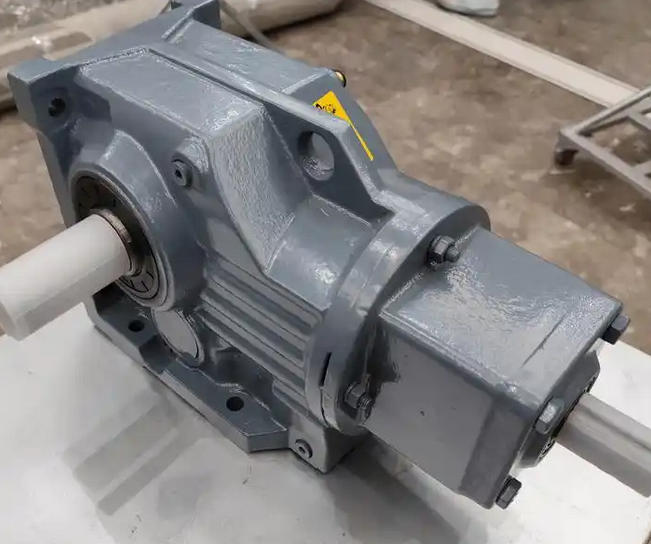
2. Check the condition of internal gears and bearings
Gear wear: Long term high load operation or poor lubrication can cause severe gear wear, pitting, and even tooth breakage, resulting in excessive meshing clearance, causing slipping and weak output. If gear damage is found during disassembly, it is recommended to replace it as a complete set.
Bearing damage: Bearing breakage or wear can cause shaft system jamming or unstable operation, increasing transmission resistance.
3. Check the lubrication and oil condition
Poor lubrication: Insufficient lubricating oil, aging and deterioration, or incorrect selection (such as mismatched viscosity) can significantly increase friction, leading to a decrease in transmission efficiency. Please ensure that the oil level is within the normal range and replace it according to the prescribed cycle.
Low temperature impact: If the ambient temperature in the workshop is low, the lubricating oil may solidify or have excessive viscosity, causing difficulty in starting and loss of rotation. At this time, it should be replaced with low-temperature synthetic gear oil or preheated before starting the machine.
4. Check installation accuracy
Excessive coaxiality error between the motor shaft and the input shaft of the reducer, as well as between the output shaft of the reducer and the load of the milling machine, can lead to uneven force distribution in the shaft system, resulting in additional resistance torque, manifested as weakness or jamming. It is recommended to use professional tools to recalibrate the installation accuracy.