What specific impacts does abnormal bearing clearance have on the performance and lifespan of P-series gear reducers
1、 The impact of small bearing clearance
When the clearance is too small, there is a lack of sufficient space for movement between the rolling elements and the raceway inside the bearing, which can lead to the following problems:
Friction heating and temperature rise intensification: Too small clearance will significantly increase the friction torque of the bearing, resulting in poor lubrication between the rolling elements and the inner and outer rings, generating dry friction and releasing a large amount of heat. This can cause a sharp increase in bearing temperature, and even lead to the deterioration or failure of lubricating oil.
Wear and locking: Continuous high temperature can accelerate the wear of bearing materials, and in severe cases, it can cause bonding, inner and outer ring expansion and cracking, ultimately leading to bearing jamming or locking, directly causing the transmission system to collapse.
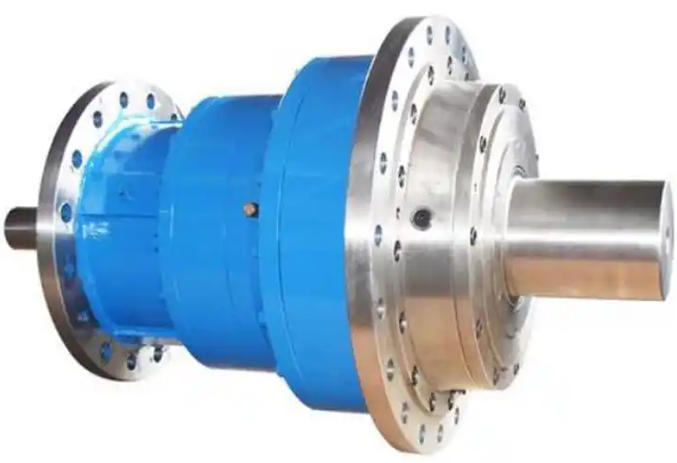
The fatigue life is significantly shortened: a too small clearance will cause the bearing to bear excessive preload force, resulting in abnormal concentration of local contact stress between the rolling elements and the raceway, causing pitting and fatigue peeling, and making the actual service life of the bearing much lower than the design life.
2、 The impact of excessive bearing clearance
When the clearance is too large, the internal components of the bearing become too loose, which can also cause a series of performance degradation:
Increased vibration and noise: Excessive clearance causes significant radial and axial runout of bearings during operation, resulting in overall vibration exceeding the standard of the gearbox and accompanied by obvious abnormal noise, seriously affecting the smooth operation of the equipment.
Decreased positioning accuracy: In transmission systems that require high-precision control, larger clearances can cause the output shaft to be unable to accurately stay at the expected position when stopped, resulting in position deviation and response lag, and reducing the dynamic response characteristics of the system.
Impact load and reduced lifespan: When operating at high speeds or subjected to alternating loads, excessive clearance can exacerbate the mechanical impact between the rolling elements and the raceway. This unbalanced load distribution can accelerate material fatigue peeling, and even cause associated damage such as changes in gear center distance and gear tooth breakage.
Decreased self-locking performance: For reducers with self-locking function (such as worm gear reducers), excessive clearance may weaken or even completely lose their self-locking ability, causing safety hazards such as unexpected load slippage.
Summary
The rationality of bearing clearance directly affects the operational stability, transmission accuracy, and service life of P series reducers. In practical applications, it is necessary to combine the specific working conditions of the reducer (such as speed, temperature, load, etc.), and control the clearance within the standard range through scientific measurement and assembly processes to avoid equipment failures caused by abnormal clearance.