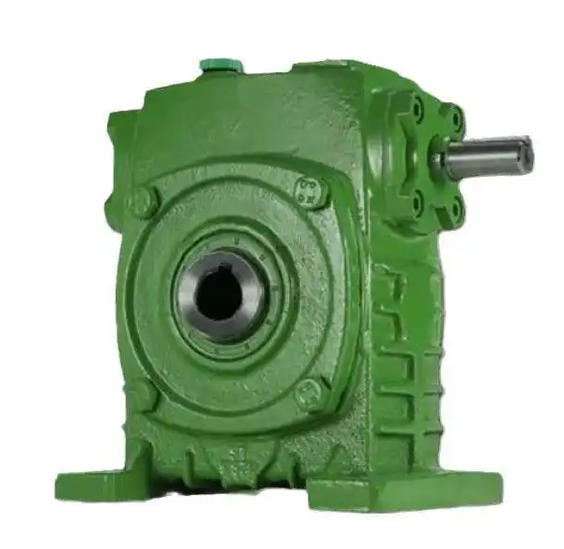
Maintenance methods for WPKS50 worm gear reducer
1. Lubrication management
Oil selection: Generally, 220 # gear oil is selected. If operating under heavy load, frequent start-up, or poor environmental conditions, lubricating oil additives can be added to form a protective film on the gear surface, reducing direct metal contact and preventing oil leakage.
Oil level standard: Lubricating oil must be checked and added while the machine is stopped, and the oil level should be maintained at 2/3 of the oil window position. Do not judge the oil level while in operation to avoid misjudgment caused by internal lubricant splashing.
Oil change cycle: The new gearbox needs to be replaced with new oil after running continuously for 300 hours for the first time; Replace every 2500 hours of use thereafter. Regularly check the oil quality in daily life. If the oil is found to be aged, deteriorated, or contains a lot of impurities, it should be replaced at any time.
Mixing is strictly prohibited: Fixed brands and models of gear oil must be used, and mixing different brands, numbers, or types of oil is strictly prohibited.
2. Running status monitoring
Temperature control: During normal operation, the shell temperature should be ≤ 85 ℃ (temperature rise should not exceed 40 ℃~45 ℃). If abnormal temperature rise or oil temperature exceeding 80 ℃~85 ℃ is found, the machine should be stopped immediately for inspection and troubleshooting before continuing to use.
Abnormal noise and vibration: Pay attention to the sound of monitoring equipment. High frequency whistling is often caused by bearing damage, and dull impact sounds often indicate gear tooth breakage or wear. If abnormal noise or vibration is generated, the machine should be stopped immediately for maintenance.
3. Daily inspection and maintenance system
Suggest establishing a standardized lubrication maintenance system and implementing regular inspections:
Daily: Check if the oil level is normal, if there is any oil leakage, and if there is any abnormal noise during operation.
Monthly: Verify the torque of each fastener to ensure a firm and reliable installation foundation.
Every six months: Replace lubricating oil (recommended to shorten to 3 months for heavy load conditions).
Every year: Check the clearance of bearings and the condition of seals.
4. Precautions for disassembly, assembly and maintenance
Standardized assembly: When disassembling and installing components, special tools should be used as much as possible. It is strictly prohibited to use hammers or other violent means to strike the gearbox housing to avoid damaging the machine body.
Accessory replacement: When replacing gears, worm gears, and worm gears, try to use original factory accessories and replace them in pairs; Attention should be paid to tolerance fit when assembling the output shaft.
Rust prevention protection: When assembling hollow shafts, it is recommended to use anti adhesive agents or red lead oil for protection to prevent wear, rust, or dirt on the mating surface that may make it difficult to disassemble in the future.
Run in test: After replacing the new spare parts, they must undergo run in and load tests to confirm normal operation before being officially put into use.
5. Installation location and environment
Installation method: If the location allows, try not to use vertical installation as much as possible. Vertical installation requires a greater amount of lubricating oil, which can easily cause the gearbox to overheat and leak oil.
Low temperature protection: If used in extremely cold environments (such as below -10 ℃), the impact of ambient temperature on the gearbox should be considered. It is recommended to configure electric heaters and other devices, and run them without load for a period of time before starting at low temperatures, and then load them again after the oil temperature rises.