How to detect temperature during the debugging of ZLYJ200-12.5-2 hard tooth reducer
When debugging the ZLYJ200-12.5-2 hard tooth reducer, temperature detection should focus on the bearing temperature and oil temperature. Usually, an infrared thermometer is used to detect the outer surface temperature of the bearing seat, and an insertion thermometer is used to measure the oil temperature inside the oil tank.
1、 The following standards should be followed during the debugging process:
Bearing temperature: At an ambient temperature of 35 ℃, the maximum temperature should not exceed 70 ℃ (temperature rise ≤ 40K); When running at full load, it can be relaxed to ≤ 80 ℃.
Oil temperature: The oil temperature inside the fuel tank should generally be ≤ 60 ℃, and it is allowed to reach ≤ 70 ℃ when the cooling system is working.
Temperature rise rate: should be controlled at ≤ 1 ℃/min to avoid lubrication failure or component damage caused by sudden temperature rise.
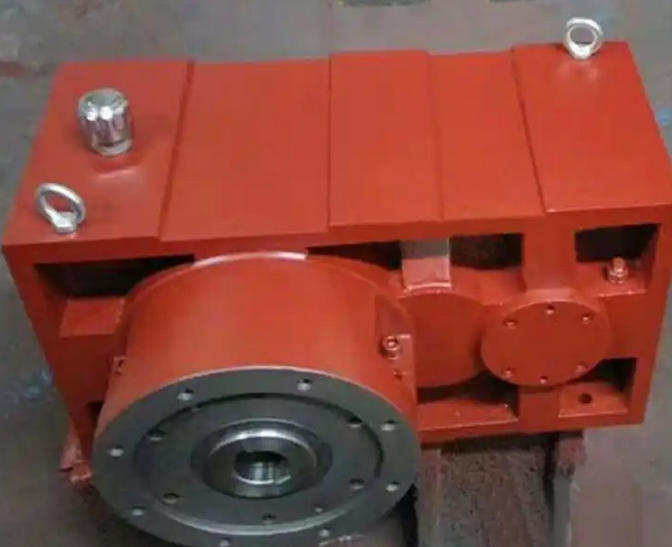
2、 The recommended testing method is as follows:
1. Environmental temperature measurement: Place the thermometer 1.5 meters away from the surface of the gearbox, at a height level with the axis, to avoid radiation and airflow interference. The reading should be synchronized with the working temperature.
2. Working temperature measurement: operate at rated speed and rated input power, and use a thermometer or infrared thermal imager with an accuracy of 0.5 ℃ to monitor key parts in real time.
3. Graded loading monitoring: gradually load at 25% → 50% → 75% → 100%, record temperature changes at each stage, and ensure stable thermal balance (fluctuation ≤ 2 ℃ within 1 hour).
In addition, non-contact fault diagnosis can be carried out by combining infrared thermal imaging detection method. The damaged area will have a local high temperature zone due to intensified friction, which is convenient for quickly locating tooth surface pitting or wear problems.