What are the specific installation requirements for ZDY reducers in food factories
1. Material and hygiene compliance requirements
Shell and surface treatment: For food production lines, it is recommended to prioritize the selection of 304 stainless steel shells or reducers with nickel plating on the surface to resist corrosion from common cleaning solutions in food factories and comply with hygiene standards such as FDA/ISO 22000.
Lubrication and sealing materials: Food grade grease must be used to avoid contamination of food caused by leakage of conventional industrial lubricants. Meanwhile, the sealing components must be made of materials that comply with food contact standards.
Delivery and traceability: Legitimate manufacturers should provide complete material certification, cleanliness testing records, and traceable batch numbers and other compliance documents upon delivery.
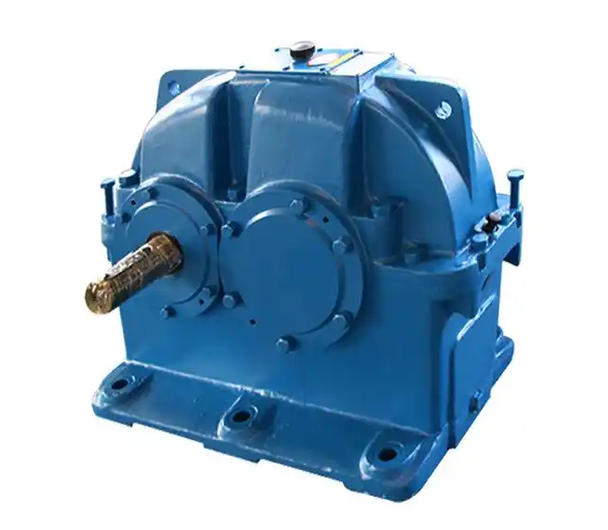
2. Basic fixation and installation environment
Foundation flatness and stability: The reducer must be firmly installed on a stable, horizontal foundation or base. Unreliable foundations can cause vibration and noise during operation, leading to damage to bearings and gears. For high-power reducers, it is recommended to pour a concrete foundation platform.
Environmental cleanliness and ventilation: The installation location should be kept clean, dry, and well ventilated to ensure smooth circulation of cooling air and avoid the influence of high temperature, high humidity, and corrosive gases. At the same time, sufficient space should be reserved for daily operation, maintenance, and heat dissipation.
Oil discharge and cleaning design: The installation position should ensure that the oil in the oil discharge groove can be smoothly discharged, and it should be easy for personnel to approach the oil gauge, vent plug, and oil discharge plug for daily inspection.
3. Precise alignment and mechanical connection
Strict alignment calibration: During installation, high attention should be paid to the alignment of the transmission center axis. It is recommended to use a laser alignment instrument to ensure that the deviation of the input/output shaft is controlled within a very small range (such as ≤ 0.05mm/m). Poor alignment can cause unnecessary external loads, leading to early damage to the bearings.
Coupling selection: It is best not to use rigid fixed couplings, and it is recommended to use elastic couplings to avoid early wear of gear pairs due to axial additional forces.
Violent installation is strictly prohibited: When installing transmission components (such as sprockets and gears) on the output shaft, it is strictly prohibited to use a hammer to directly strike. Assembly fixtures and internal threads on the shaft end should be used to press in with bolts to prevent damage to the internal parts of the gearbox.
4. Lubrication system and commissioning operation
Lubrication pretreatment: Before the first oil injection, it is recommended to use flushing oil to circulate and clean the pipeline, remove residual casting sand and other impurities on the inner wall of the gearbox, and prevent the lubricating oil pollution index from exceeding the standard.
Oil level check: Open the oil level plug according to the specified installation position, add oil until the lubricating oil overflows from the oil level plug screw hole, and ensure that the oil level is within the specified range.
No load and load test run: After installation, a no-load test run of no less than 2 hours is required to confirm smooth operation, no impact vibration, no noise, and no oil leakage. After confirming normal operation, gradually load to the rated load and continuously monitor the temperature rise (usually the oil temperature should be ≤ 85 ℃).
5. Dust and protection adaptation
If there is a high concentration of dust in the food factory workshop (such as flour mill, feed processing workshop), it is necessary to select reinforced shaft seals and respirator filters (such as labyrinth dust prevention structure), and appropriately shorten the lubricant replacement cycle. Regularly clean the surface of the box to ensure good heat dissipation performance.