Key points for selecting reducers for chemical mixers, suitable for high corrosion and high viscosity working conditions
The working conditions of mixers in the chemical industry are special, with multiple high viscosity materials, acid and alkali corrosion, continuous and uninterrupted operation, explosion-proof and other special requirements. The performance, material and stability requirements of reducers are much higher than those of ordinary civilian mixing equipment. Choosing the wrong reducer not only results in poor mixing efficiency, but also frequent malfunctions and potential safety hazards. For the chemical industry, explain the core points of gearbox selection.
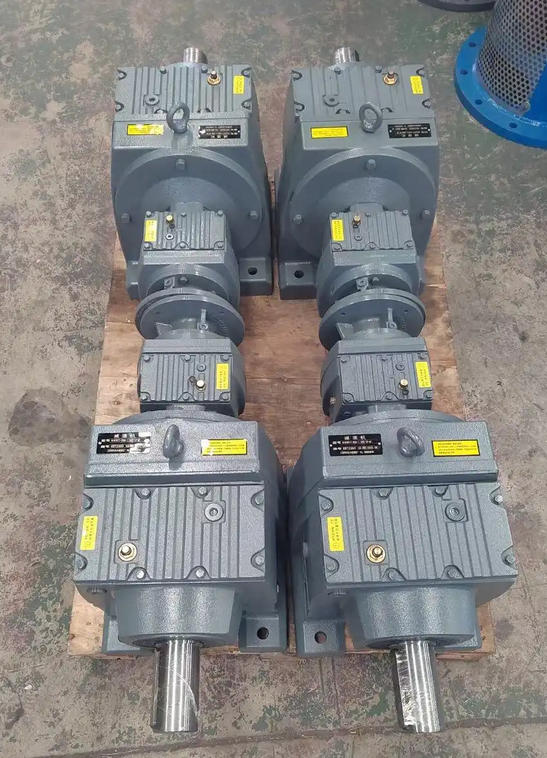
Firstly, match the machine model according to the viscosity of the material. Low viscosity chemical materials (aqueous solutions, dilution reagents) require high rotational speed and low torque, and can use helical gear reducers for high transmission efficiency and low energy consumption; High viscosity materials (such as adhesives, slurries, and paste like raw materials) have extremely high mixing resistance and require the use of K-series spiral bevel gear reducers or planetary reducers. They rely on high torque to ensure even mixing and avoid blade jamming and uneven mixing.
Secondly, pay attention to anti-corrosion and sealing performance. Chemical materials often have acidic and alkaline corrosiveness. When selecting, priority should be given to using a gearbox with a box anti-corrosion coating and a precision sealing structure. The shaft end should use a corrosion-resistant oil seal to prevent corrosive materials and gases from entering the interior of the equipment, corroding gears and bearings, and extending the service life of the equipment.
Thirdly, special matching for explosion-proof working conditions. For mixing scenarios involving flammable and explosive materials and closed reaction vessels, the reducer must be equipped with an explosion-proof motor that meets the Exd Ⅱ CT4 and above explosion-proof rating, to prevent safety accidents caused by electric sparks, and to adapt to the explosion-proof safety regulations of chemical workshops.
Fourthly, adapt to the requirements of continuous work. Chemical production lines often operate 24 hours a day without interruption, and inefficient and heat prone worm gear reducers are prohibited. Hard tooth surface gear reducers are preferred, which are resistant to high temperatures, fatigue, and stable transmission. They can operate continuously for a long time, reducing the probability of downtime for maintenance.