Key points for selecting universal reducers
In contrast, type selection is relatively simple, and accurately providing the operating conditions of the reducer, mastering the design, manufacturing, and usage characteristics of the reducer, is the key to correctly and reasonably selecting specifications for general reducers.
The selection of specifications should meet the conditions of strength, thermal balance, and radial load bearing capacity of the shaft extension.
1. Select specifications based on mechanical power or torque (strength verification)
The biggest difference between the design and selection methods of general reducers and special reducers is that the former is suitable for various industries, but the reducer can only be designed according to a specific working condition. Therefore, when selecting, users need to consider different correction factors according to their respective requirements. The factory should label the actual selected motor power (not the rated power of the reducer); The latter is designed according to the user's specific conditions, and the coefficients to be considered are generally taken into account during the design process. When selecting, as long as the power used is less than or equal to the rated power of the reducer, the method is relatively simple.
The rated power of a universal reducer is generally calculated and determined based on the usage (operating condition) coefficient KA=1 (with the electric motor or steam turbine as the prime mover, the load on the working machine is stable, working for 3-10 hours per day, starting frequency ≤ 5 times per hour, and the allowable starting torque is twice the working torque), contact strength safety factor SH ≈ 1, and the failure probability of a single pair of gears ≈ 1%, among other conditions.
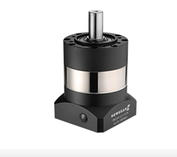
The rated power of the selected reducer should meet the requirements
PC=P2KAKSKR≤PN
In the formula, PC - calculated power (KW);
PN - rated power of reducer (KW);
P2- Working machine power (KW);
KA - coefficient of use, considering the impact of operating conditions;
KS - start-up coefficient, considering the influence of start-up times;
KR - Reliability coefficient, considering different reliability requirements.
At present, the usage coefficients used by countries around the world are basically the same. Although many samples do not reflect the two coefficients of KSKR, due to a clear understanding of one's own operating conditions and the performance characteristics of the reducer, foreign selection generally leaves a large margin, which is equivalent to considering the influence of KRKS.