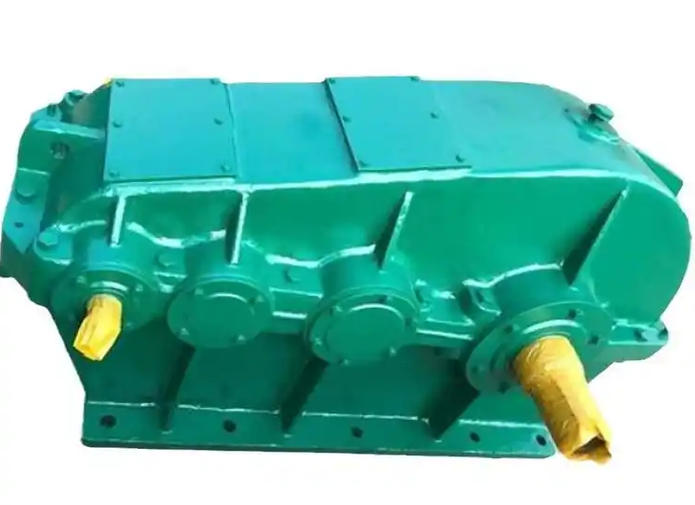
Is the input shaft of the ball press reducer worn?
1、 The core reason for the wear of the input shaft of the ball press reducer
Based on the operating characteristics of the ball press equipment, the wear of the input shaft is mainly caused by the following factors:
Long term high load operation: The ball press belongs to heavy-duty equipment, and the input shaft and hydraulic coupling transmit torque through key coordination. Long term high load operation can cause excessive pressure on the torque at the key coordination part.
Coordination gap and vibration: If the coordination components are clearance matched, the vibration generated during operation will continuously expand the wear range.
Insufficient installation accuracy: If there are errors during initial installation, it can lead to uneven force distribution; In addition, loose fit between the key and keyway, and failure to tighten during installation can also cause unstable power transmission, resulting in a "slip" phenomenon and leading to wear of the keyway and shaft body.
Improper emergency repairs: Some companies apply metal repair agents on the surface of worn shafts as an emergency measure to quickly resume work. This type of material can only temporarily fill gaps and cannot meet the requirements of equipment operating strength and accuracy, often leading to a vicious cycle of "getting worse with more repairs".
2、 Misconceptions of Traditional Restoration Methods
When encountering shaft wear, many companies are prone to falling into the misconception of traditional maintenance, resulting in repeated failures:
Repair welding: Traditional repair welding can generate high temperature thermal stress, which can easily cause deformation of the shaft, material damage, and even lead to cracks or fractures, leaving serious safety hazards.
Electric brush plating repair: Due to the limitation of coating thickness (generally less than 0.2mm), the efficiency of brush plating is extremely low when the wear is large, and excessively thick brush plating layers are prone to detachment under heavy loads, resulting in a short service life.
Blindly replacing new shafts: not only is the procurement cost high, but the dismantling, transportation, and processing cycles are also long, which can lead to long-term downtime of the production line and low overall cost-effectiveness.
3、 Accurate solution: on-site repair technology for polymer composite materials
At present, the mainstream and efficient precise solution for the wear of the input shaft of the reducer in the industry is to use carbon nano polymer (polymer composite material) on-site repair technology (such as Sore, Fushilan and other repair materials). This technology utilizes the special mechanical properties of materials, such as strong adhesion, compression and wear resistance, and possesses a "yielding property" that metals do not have, which can fundamentally solve the problem of shaft wear.