Introduce the common faults and solutions of the lubrication system in non-standard reducers
1、 Oil degradation fault
Symptoms of oil degradation faults: oxidation and blackening of lubricating oil, emulsification and water ingress, excessive impurities, significant decrease in oil film strength, and significantly accelerated wear of gears and bearings.
Solution to oil degradation related faults:
1. Choose synthetic gear oil with good thermal stability for high-temperature conditions, shorten the oil change cycle by 30%, and regularly sample and test the acid value and impurity content.
2. After discovering oil emulsification, immediately drain the old oil, clean the inside of the box, and add new oil. At the same time, check the water inlet point of the shaft end seal and replace the seal.
2、 Insufficient fuel supply fault
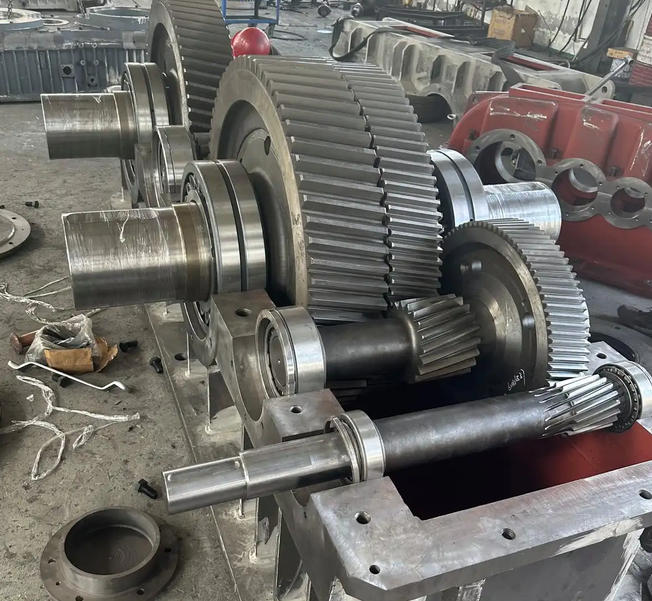
Symptoms of insufficient oil supply: The oil level is below the lower limit of the sight glass, and the small gears and bearings of the vertically installed reducer cannot be submerged in oil, resulting in dry friction noise. In a short period of time, tooth surface adhesion and bearing burnout may occur.
Solution to fuel shortage fault:
1. After cooling down, check the oil level and add the corresponding brand of lubricating oil to the standard level. The oil filling amount for vertical installation models should be increased by 30% compared to horizontal models.
2. The forced circulation lubrication system should regularly clean the inlet filter of the oil pump to avoid blockage and interruption of oil supply.
3、 Lubrication system overheating fault
Performance of lubrication system overheating fault: The operating oil temperature exceeds 85 ℃, the heat sink/cooling pipeline is blocked, the viscosity of the lubricating oil rapidly decreases, and the sealing components are aged and deformed due to heat.
Solution to overheating fault of lubrication system:
1. Clean the oil and dust on the surface of the heat sink, unclog the cooling pipeline of the water cooling system, adjust the cooling water flow rate, and check the operation status of the cooling fan of the air cooling system.
2. Install an oil temperature controller to automatically activate the cooling system when the oil temperature exceeds the limit, avoiding prolonged high-temperature operation.
4、 Lubrication leakage and pollution faults
Fault manifestation: Oil leakage at the joint surface and shaft end seal, rapid loss of oil, external dust and impurities entering the box in reverse, exacerbating abrasive wear of transmission components.
Solution:
1. Select specialized lubricating oil additives with sealing ring modifiers to restore the elasticity of seals and reduce non-destructive leakage.
2. Replace the oil seal that has aged and failed directly, and use anti adhesive to protect the mating surface during assembly to avoid repeated leakage caused by wear on the shaft surface.