Full analysis of the principle, application, and maintenance of ZSY hard tooth surface gear reducer
In the field of industrial power transmission, the reducer serves as a key hub connecting the power source and the working machine, and its performance directly determines the efficiency, reliability, and lifespan of the entire transmission system. Among them, hard tooth surface gear reducers have become the preferred choice for many heavy-duty and high-precision applications due to their unique structural design and material technology. This article will start from a specific physical mechanism, systematically explain the working principle of this type of reducer, and based on this, extend to its application adaptability and maintenance points.
1、 Core mechanism of action: correlation between contact fatigue strength and tooth surface hardening process
To understand hard tooth gear reducers, we should not start with the common function of "reducing speed and increasing torque", but rather with the core engineering problem solved by the naming of "hard tooth surface": contact fatigue failure.
When gears are engaged for transmission, the surface material of the teeth will experience fatigue under the repeated action of periodic contact stress, leading to phenomena such as pitting and peeling, ultimately resulting in transmission failure. For gearboxes that transmit high power and bear high loads, this is one of the main forms of failure. The contact fatigue strength of ordinary soft tooth surface gears is limited and difficult to meet harsh working conditions. The "hard tooth surface" technology has emerged, which essentially involves using specific heat treatment processes (such as carburizing, quenching, nitriding, etc.) to significantly increase the hardness of the gear tooth surface layer (usually reaching HRC58-62 or above), while maintaining the toughness and strength of the tooth core. This gradient material property of "external hardness and internal toughness" significantly improves the contact fatigue limit and bending fatigue strength of gears, thus becoming the technical basis for gearboxes with high load-bearing capacity, relatively compact volume, and long service life. The reinforcement at the material level is the logical starting point for understanding all subsequent performance advantages.
2、 Evolution of transmission structure based on core mechanism
The implementation of tooth surface hardening technology has profoundly influenced the internal structural design of the gearbox. Due to the extremely high hardness of the tooth surface, strict requirements are placed on machining accuracy, and the matching relationship of the gear pair also needs to be adjusted accordingly.
1. Accuracy and meshing requirements: Hard tooth surface gears undergo precision grinding to ensure tooth profile accuracy and reduce surface roughness. High precision meshing can effectively reduce the impact and noise caused by tooth profile errors, and evenly distribute the load along the tooth width, which is a prerequisite for leveraging the high load-bearing advantages of hard tooth surfaces. The gears of this type of reducer usually have a high level of precision.
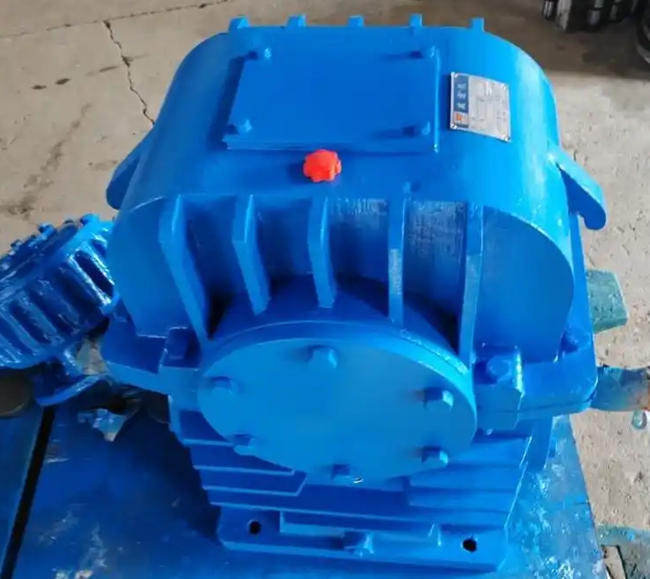
2. Adaptability of structural layout: In order to bear the huge torque transmitted by the high hardness tooth surface, the box structure of the reducer needs to have extremely high rigidity and dimensional stability. It usually adopts a box structure and uses high-quality cast iron or welded steel structure to resist deformation and ensure the positioning accuracy of the bearing seat hole and gear axis. The shaft system design is also more robust, and bearings are often selected from models with higher load-bearing capacity.
3. Special design for heat dissipation and lubrication: High load and high-speed operation will generate a lot of heat. Hard tooth surface reducers are usually equipped with more efficient lubrication systems, such as splash lubrication or forced circulation lubrication, to ensure that the tooth surface and bearings are fully lubricated and cooled. Lubricating oil not only reduces friction and wear, but also plays a role in taking away heat and preventing adhesion. The sealing structure also needs to be particularly reliable to prevent oil leakage and isolate external pollutants