How To Fix Oil Leaks On Loom Reducers 3 Common Leak Points And Root Cause Repair Methods
1、 Oil leakage point one: Oil leakage at the shaft end oil seal
This is the most common and stubborn oil leakage area of the loom reducer, especially at the sealing ring of the drive shaft, which often leaks the most severely.
1. Core reasons
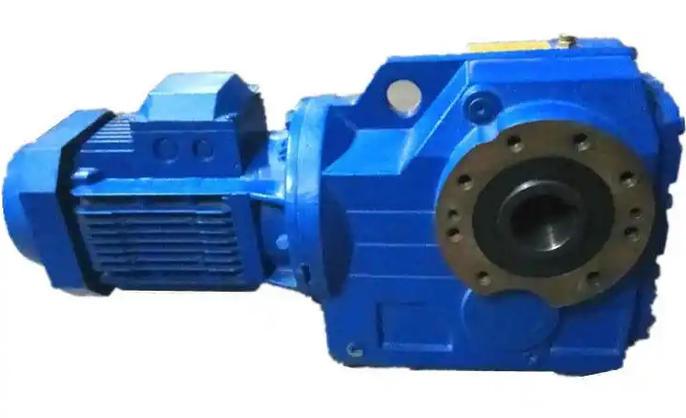
Oil seal aging and failure: The temperature and humidity in the weaving locomotive room are high, and the rubber oil seal operates in a high-temperature and oily environment for a long time, which is prone to hardening, cracking, and loss of elasticity, resulting in a significant decrease in sealing performance.
Neck wear: The neck of the shaft rubs against the oil seal lip for a long time, resulting in wear grooves on the surface. After sealing with new oil, the lip cannot fit tightly, forming a leakage channel.
Improper assembly process: During installation, the oil seal lip is scratched, installed backwards, skewed, or deformed due to the use of specialized tools.
The pressure inside the box is too high: the ventilation hole is blocked, and the gear stirring oil generates heat, causing the pressure inside the box to rise and pushing the lubricating oil out of the oil seal.
2. Radical solution
Accurate selection upgrade: High quality double lip skeleton oil seals (with dust-proof lips) are selected for regular operating conditions, and replaced with fluororubber (FKM) or polytetrafluoroethylene (PTFE) material oil seals for high-temperature continuous operation conditions, which can withstand temperatures above 180 ℃.
Neck repair: Polish the slightly worn neck with fine sandpaper until the roughness Ra ≤ 1.6 μ m; For those with deep wear grooves, brush plating, chrome plating, or installation of stainless steel shaft sleeves can be used for repair. In severe cases, the shaft can be replaced directly.
Standardized installation: Apply lubricating grease to the lip before installation, use a special sleeve fixture to press it vertically and evenly, and strictly prohibit using a hammer to strike directly.
Install oil slinger: Install an oil slinger on the inside of the shaft head seal to prevent lubricating oil from directly impacting the sealing lip.
2、 Oil leakage point 2: Oil leakage at the joint surface of the box body
The leakage at the connection between the upper and lower shells, as well as the joint surface between the end cover and the box body, is also a long-standing problem for the loom reducer.
1. Main reasons
Aging and failure of sealant: The original sealant hardens and cracks after long-term operation, losing its sealing function.
Joint surface deformation: The casting has not undergone annealing or aging treatment, and the release of internal stress causes deformation of the box body; Or check if the hole cover plate is too thin, or if it deforms after tightening the bolts, causing the joint surface to not fit tightly.
The weaving machine vibrates greatly during operation, and after long-term operation, the bolts on the joint surface loosen, resulting in gaps.
Inadequate assembly cleaning: During maintenance, the iron filings and oil stains on the joint surface were not cleaned thoroughly, and the sealant could not fully fill the gaps.
2. Solution
Thoroughly clean the joint surface: After unpacking, remove the old sealant and oil stains, check the flatness with a ruler or blue lead, and only continue to use if the deviation is ≤ 0.1mm/m. For severe deformation, it needs to be ground or scraped for repair.