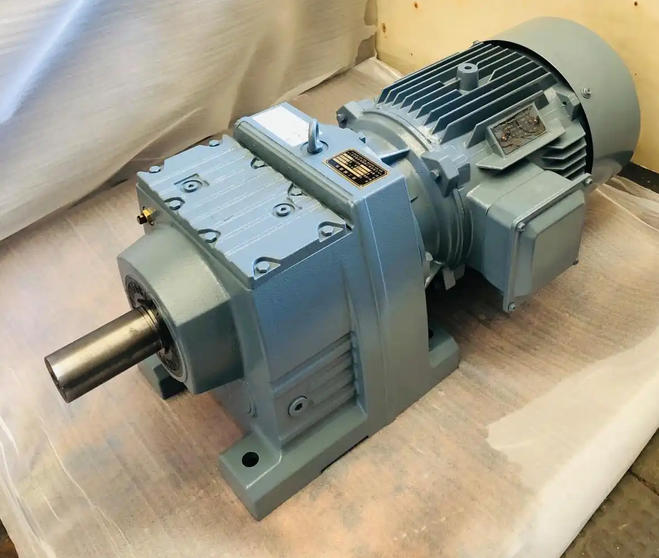
How Should an R87-Y5.5KW-4P-15-M1 Gear Reducer Be Maintained to Withstand High-Temperature Operating Environments?
To
significantly reduce the failure rate and extend the operation cycle of
an R87-Y5.5KW-4P-15-M1 gear reducer in high-temperature environments
(typically defined as ambient temperatures ≥ 40°C), systematic
protection must be implemented. The core methods revolve around
optimizing lubrication, strengthening heat dissipation, upgrading
sealing, and conducting regular monitoring across five key aspects:
1. Select High-Temperature Specialized Lubricating Oil and Scientifically Manage Oil Quality
Poor
lubrication is the primary cause of gearbox failures in
high-temperature settings, accounting for approximately 60% of issues.
Proper oil selection and maintenance are critical:
-
Selection Requirements: Utilize high-temperature-resistant synthetic gear oils, such as PAO
base oil or ester synthetic oil. These should have a drop point ≥ 180°C
and oxidation stability ≥ 1000 hours. For operating conditions above
60°C, a viscosity grade of ISO VG 220 or 320 is recommended.
-
Replacement Cycle: High temperatures accelerate oil oxidation by 3 to 5 times compared to
normal conditions. The standard 8000-hour replacement cycle should be
shortened to every 1,000–1,500 hours. In extreme high-temperature
environments (≥ 80°C), the interval should be further reduced to 800
hours.
-
Oil Quality Monitoring: Inspect the oil weekly; a black color or turbidity indicates a need for
immediate replacement. Additionally, use a portable acid value
analyzer, and replace the oil immediately if the acid value increases by
more than 0.5 mgKOH/g.
2. Strengthen the Cooling System and Control Operating Temperature
Effective thermal management is essential to prevent overheating:
-
Clean Heat Dissipation Structures: Regularly use compressed air to remove dust and oil stains from the
gearbox housing and cooling fins. Accumulated debris acts as an
insulation layer that severely hinders heat dissipation efficiency.
-
Install Auxiliary Cooling: When ambient temperatures consistently reach ≥ 45°C, install an axial
flow fan or a water-cooled jacket to maintain the oil temperature below
85°C.
-
Control Load and Operation: Avoid frequent start-stop cycles that cause instantaneous heating
spikes. Furthermore, keep the operational load below 80% of the rated
value to prevent overloading from exacerbating the temperature rise.
3. Upgrade Seals and Protective Structures to Resist High-Temperature Aging
Standard rubber seals are prone to hardening and cracking under high heat, leading to oil leaks and dust intrusion:
-
Replace with High-Temperature Resistant Seals: Swap standard nitrile rubber (NBR) oil seals for fluororubber (FKM) or
silicone rubber (VMQ). These materials can withstand temperatures
ranging from -20°C to 200°C, effectively preventing leakage.
-
Adopt Advanced Sealing Combinations: Utilize a "double-lip oil seal + labyrinth seal" configuration to
enhance shaft-end reliability. Apply high-temperature grease (with a
drip point ≥ 200°C) to the seal lips to further extend their service
life.
-
Install Protective Covers: In dusty, high-temperature environments, fit a metal protective cover
over the gearbox. Ensure ventilation openings are equipped with filters
to block external pollution pathways.