
Four Sea Ltd
sales@reducersgearboxes.com
sales@reducersgearboxes.com

Filling equipment runs with frequent start-stop cycles, continuous operation and rigorous hygiene standards. These operating characteristics place heavy stress on reducers, the critical power transmission parts, creating tough working environments. To successfully extend reducer service life on filling machinery, five core areas should be prioritized: correct model selection, standardized installation, systematic lubrication management, routine upkeep and environmental monitoring.
Reserve adequate safety allowance: Filling lines produce heavy shock loads at startup or during bottle blockages. During selection, engineers need to calculate rated torque and check peak torque together with radial and axial loads. A safety factor between 1.5 and 2 is advised to avoid gear fatigue and tooth fracture triggered by long-term overload.
Account for special operating scenarios: Where corrosive fluids like acidic or alkaline cleaning chemicals are handled, reducers with anti-corrosion coatings or stainless steel casings are required. For explosion-risk workshops filling alcohol or solvents, explosion-proof motors and reducers complying with relevant industry standards shall be adopted.
Maintain coaxiality and alignment: When coupling the reducer output shaft to filling machine actuators including cams, rotary tables and conveyor systems, high coaxiality is mandatory. Major misalignment will trigger strong vibration, speed up bearing deterioration and shorten oil seal service life. Laser alignment tools are recommended for calibration work.
Fastening and vibration isolation: Mounting bolts must be tightened to specified torque values and inspected periodically for loosening. For filling machines with frequent vibration, vibration isolation pads can be fitted under the reducer base to cut vibration transfer to the unit.
No heavy hammer strikes allowed: Never hammer directly on the reducer shaft end while mounting couplings or pulleys. Thermal fitting processes or dedicated hydraulic tools should be used to protect the preload of internal bearings and gears.
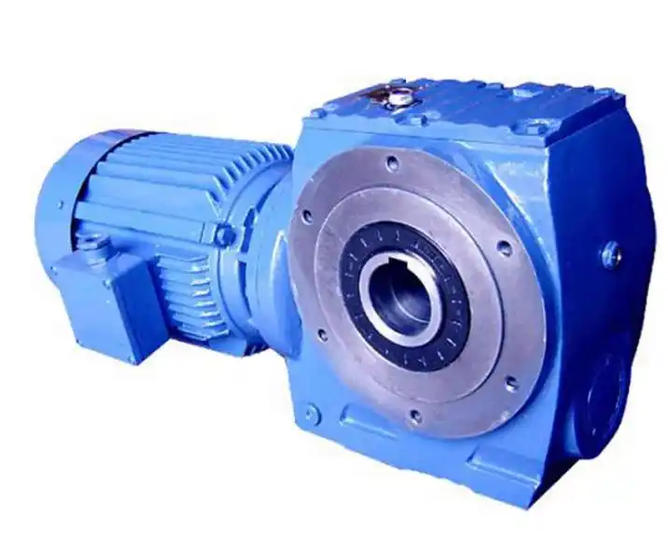
Choose suitable lubricants: Always apply lubricating oil or grease of the grade specified in the product manual. Equipment touching food products needs NSF H1 certified food-grade lubricants conforming to food safety regulations to eliminate cross-contamination risks.
Manage oil level and operating temperature: Overfilled oil causes heat generation from churning; insufficient oil results in inadequate lubrication. Keep working temperature within acceptable limits, normally below 80–90°C. High temperature accelerates lubricant oxidation and seal damage. Cooling fans or water cooling assemblies may be installed as needed.
Scheduled oil replacement: For new units, perform the first oil change after 300–400 operating hours to remove metallic debris generated during run-in. After break-in, carry out periodic oil changes every 3,000 to 5,000 hours based on site conditions. Simply adding fresh oil without full replacement is not acceptable.
Name: Hu Bo
phone:+8618881888393
Whatsapp:+8618881888393
Email:sales@reducersgearboxes.com
Add:No. 10 Xiyuan Road, Hangzhou City, Zhejiang Province, China