What are the solutions to the high heat generation of CW series circular cylindrical worm gear reducers
1、 Optimize lubrication system
Lubrication is the key to reducing friction and lowering heat generation.
1. Accurate oil selection: It is necessary to use special oil for worm gears (such as L-CKE/P type), and it is strictly prohibited to use ordinary gear oil. Specialized oil has better extreme pressure anti-wear properties and oil film strength, which can significantly reduce friction losses between tooth surfaces.
2. Control oil level: Regularly check the oil level to ensure that the oil level is between 1/2 and 2/3 of the oil level gauge, or to ensure that about 1/3 of the worm gear tooth surface is submerged in oil. Too little oil can lead to insufficient lubrication, while too much oil can increase the risk of heating and leakage due to vigorous agitation.
3. Regular oil change: Develop an oil change plan and promptly replace lubricating oil that has aged, turned black, or mixed with impurities such as metal shavings. Under high temperature or high load conditions, the oil change cycle should be shortened.
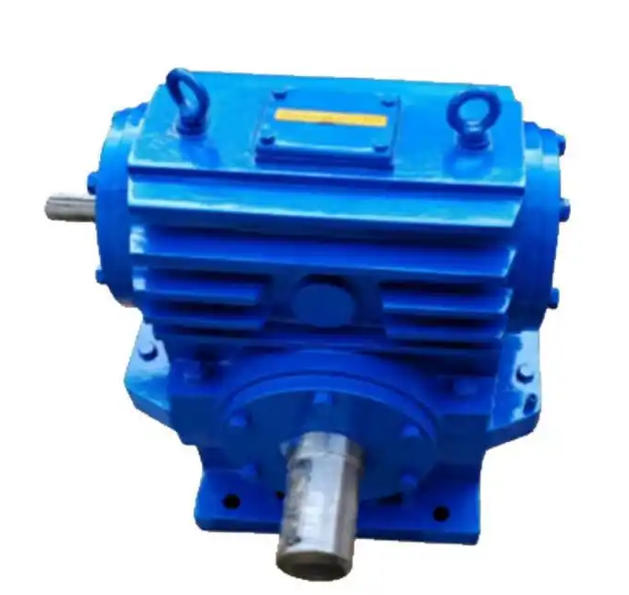
4. Upgrade lubrication method: For high-speed or heavy-duty working conditions, consider changing immersion lubrication to forced pressure oil injection lubrication, which directly delivers lubricating oil to the meshing parts through an oil pump, taking away a large amount of heat while fully lubricating.
2、 Enhance heat dissipation capability
When natural heat dissipation cannot meet the demand, proactive intervention is needed.
1. Cleaning and ventilation: Regularly clean the heat dissipation fins and surrounding dust on the surface of the gearbox housing to ensure sufficient space around the equipment and maintain good natural ventilation conditions.
2. Installing heat dissipation fins: Adding heat dissipation ribs on the outer surface of the box can effectively increase the heat dissipation area, which is a low-cost improvement method.
3. Forced air cooling: Installing a cooling fan at the end of the worm shaft or a fan next to the equipment can significantly improve the heat dissipation effect by forcing air to flow through the surface of the box.
4. Water cooling: In extreme working conditions, cooling water pipes can be installed in the oil tank of the box, and circulating water can be used for cooling, which is the most significant method for heat dissipation.
5. Open the exhaust cap: This is an easily overlooked but crucial operation! Be sure to ensure that the exhaust cap on the top of the gearbox is open, so that the internal hot air can be discharged in a timely manner to prevent oil leakage and poor heat dissipation caused by the increase in pressure inside the gearbox.
3、 Check installation and load
Incorrect installation and overloaded operation are common causes of heat generation.
1. Calibration alignment: Use tools such as laser alignment instruments to accurately calibrate the coaxiality between the input/output shaft of the reducer and the driving equipment. It is recommended to control the centering tolerance of the CW series within ≤ 0.1mm. Misalignment can cause additional friction and vibration, leading to severe heating.
2. Verify load: Confirm that the actual load does not exceed the rated value of the gearbox through methods such as motor current monitoring. Long term overload operation can directly lead to increased friction and high temperature rise.
3. Check meshing: If conditions permit, check the meshing clearance and contact spots of the worm gear. Insufficient mesh clearance or poor contact can exacerbate wear and heat generation.