How to repair the vibration of the grinding machine reducer? Identify the root cause and thoroughly solve the vibration problem
Firstly, the unstable installation foundation is the root cause. The equipment is placed on uneven ground, with loose foot screws and not firmly fixed, which inevitably generates vibration during operation. Solution: Place the equipment on a flat and hard surface, evenly tighten all anchor bolts, and tighten them symmetrically to avoid unilateral force. Old equipment can be equipped with anti slip and shock-absorbing pads to cushion operational vibrations.
Secondly, there is a deviation in the coaxiality of the transmission. The coupling between the reducer, motor, and grinding roller is offset or misaligned, resulting in a lack of concentricity in transmission. This can generate significant radial forces during operation, leading to high-frequency vibrations. Need to readjust the position of the coupling to ensure precise alignment of the axis, even clearance, and secure the positioning screws to prevent transmission deviation.
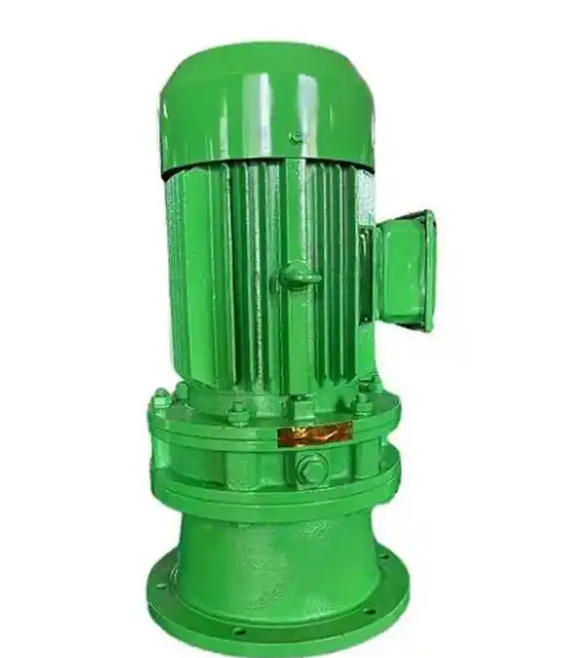
Thirdly, internal components are worn and loose. Long term operation can lead to gear wear, excessive meshing clearance, bearing damage, loose keyway, internal transmission imbalance, and sustained vibration accompanied by abnormal noise. Disassemble the machine for inspection, replace worn bearings and gears, tighten loose key blocks and internal components, adjust gear mesh clearance, and restore transmission balance.
Fourth, uneven load and overloaded operations. Uneven material feeding, excessive feeding on one side, or long-term overload operation during grinding can cause equipment load imbalance and vibration. Uniformly feed materials during operation, strictly control the rated load, avoid impact loading, and maintain stable operation of the equipment.
By following the above steps one by one, the vibration problem of the reducer can be completely solved, equipment accessories can be protected, and the service life of the whole machine can be extended.