How to select SAF series reducers in extremely cold regions
1、 Sealing System: Key to Selection and Handling
At low temperatures, ordinary rubber seals will harden and shrink, leading to oil leakage. This is the most important aspect to pay attention to under extremely cold working conditions.
1. Selection of sealing materials
(1) -25 ℃~-40 ℃: Low temperature fluororubber (FKM) or silicone rubber (VMQ) should be selected. Silicone rubber has the best low-temperature resilience, but slightly lower wear resistance, making it more suitable for low-speed or static sealing.
(2) Under extremely cold conditions of ≤ -40 ℃, it is necessary to use polytetrafluoroethylene (PTFE) sealing rings or spring energy storage sealing components, which will hardly harden due to low temperatures.
(3) Static sealing gasket: Replace the normal temperature rubber gasket with a cold resistant rubber, PTFE gasket, or metal wrapped gasket.
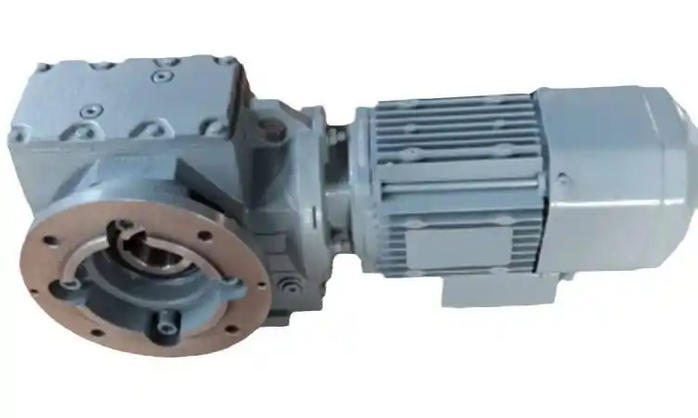
2. Optimization of sealing structure
Priority should be given to spring tight oil seals: The built-in stainless steel spring can compensate for the shrinkage of rubber at low temperatures, continuously holding the shaft neck to prevent oil leakage.
Adopting a dual lip oil seal: The outer dust-proof lip can effectively block the infiltration of ice, snow, and dust, preventing the lip from freezing and getting stuck.
Shaft surface optimization: Ensure that the surface roughness of the shaft neck is between Ra0.4-0.8 μ m, and if necessary, perform quenching or hard chrome plating to prevent the sealing lip from becoming hard at low temperatures from being scratched.
3. Pre processing before assembly
Indoor temperature recovery: It is strictly prohibited to directly assemble rubber seals in low-temperature outdoor environments. It should be moved to a warm room in advance to avoid hidden cracks caused by rubber stiffness during installation.
Use cold resistant grease: When installing the lip, it is necessary to apply cold resistant grease and avoid using ordinary butter to prevent solidification and damage to the oil seal.
Adjust interference fit: Considering low-temperature shrinkage, the installation interference fit can be increased by 5% to 8% compared to normal temperature conditions, but it should not be too tight to avoid lip wear caused by overheating.
2、 Lubrication system: Ensure oil fluidity
Low temperature can cause a sharp increase in viscosity and poor fluidity of lubricating oil, which not only increases starting resistance, but also generates huge oil pressure that may push open the oil seal lip and cause leakage.
Choose low pour point cold resistant gear oil: Select the appropriate pour point lubricating oil based on the lowest historical temperature in the local area to ensure fluidity even at extreme low temperatures.
Installation of preheating device: For equipment that operates in an environment below -30 ℃ for a long time, it is recommended to install an electric heat tracing strip or insulation cotton on the reducer housing, or install an oil heater in the oil tank. Preheat before starting up, wait for the oil to flow smoothly before running under load.
3、 Structure and hardware protection
Add insulation/heating structure: For long-term environments below -30 ℃, the gearbox housing should be equipped with insulation cotton and electric heat tracing tape to maintain the basic temperature of the box above the embrittlement temperature of the sealing components during shutdown.
Installing a protective cover: For outdoor equipment, installing a protective cover can effectively resist the cold wind blowing directly on key parts such as oil seals, slowing down heat loss.