What is the function of the load fluctuation verification stage for the R series gear reducer
1、 Core role and value
1. Verify the dynamic stability of the transmission system: Under constant speed or variable load conditions, detect the periodic or random variation amplitude of the output torque, identify potential defects such as gear meshing errors, bearing assembly deviations, or box deformation.
2. Evaluate the reliability of thermal balance and lubrication: Simulate the alternating stress under actual working conditions, verify the heat dissipation ability and oil film retention of the reducer during frequent start stop and forward/reverse switching, and prevent adhesive failure caused by excessive temperature rise.
3. Testing structural strength and fatigue life: By conducting short-term overload tests at 110% to 125% rated load, the safety margins of gears, shafts, and boxes are verified, and risks such as tooth breakage and shaft breakage are exposed in advance, providing data support for product life prediction.
4. Ensure adaptability to actual working conditions: Ensure that the gearbox can maintain output torque fluctuation of ≤± 5% in industries with impact loads such as metallurgy, mining, and lifting, to avoid production line shutdown due to unstable transmission.
2、 Key monitoring indicators during the verification phase
1. Torque fluctuation rate: Under rated load, it should be ≤ 3%~5%. Exceeding the threshold indicates unstable transmission or sudden load changes.
2. Temperature rise control: If the temperature rise of the oil tank is ≤ 35K (maximum ≤ 85 ℃), the temperature rise of the bearing is ≤ 40K (maximum ≤ 80 ℃), and the temperature fluctuation is ≤ 1 ℃/30min, it is considered as thermal equilibrium.
3. Vibration and noise: The effective value of the shell vibration velocity is ≤ 4.5mm/s (precision level ≤ 2.8mm/s), and the noise under rated load is ≤ 80dB (A).
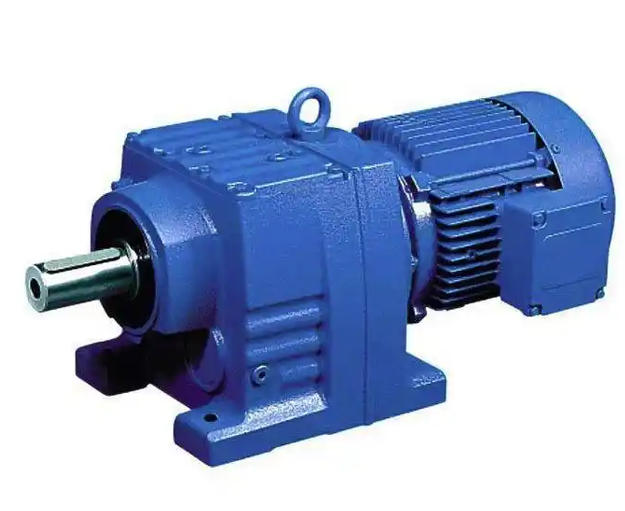
4. Transmission efficiency: single-stage gear reducer ≥ 96%~98%, multi-stage ≥ 85%~96%, efficiency fluctuation ≤ 2%.
3、 Typical verification process (based on standards such as GB/T 16444)
1. Step by step loading: After normal no-load operation, gradually increase the rated load by 25% → 50% → 75% → 100%, and run each level for 30-60 minutes.
2. Overload verification: Run at 110% load for 15 minutes, run at 125% load for 10 minutes, and confirm that there is no abnormal vibration, noise, or sudden temperature rise.
3. Alternating load test (optional): Simulate actual working conditions for forward and reverse cyclic loading (such as 10-30 seconds/cycle), monitor torque fluctuation rate and backlash changes.
4. Data recording and analysis: Collect torque, speed, temperature, and vibration spectra throughout the process, generate a 'Load Fluctuation Verification Report' as the basis for acceptance or design optimization.