Under what circumstances should the output shaft of the BLED20-391-0.75KW cycloidal gear reducer be directly replaced with a new one, without straightening
1、 Structural damage to the shaft body
1. Visible cracks, fractures, and local breaks appear on the surface of the shaft, or there is significant plastic deformation of the rear axle body after impact
2. Any section of the shaft undergoes twisting deformation, resulting in complete loss of coaxiality, and straightening cannot restore the original form and position accuracy
3. The spline part of the shaft and the bearing fitting position have rolling keys, severe wear and peeling, and the roughness of the fitting surface exceeds the standard and cannot be repaired
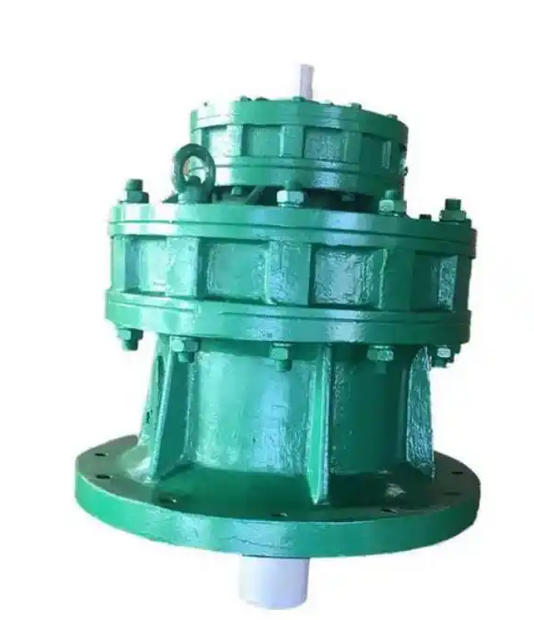
2、 Bending exceeds the safety threshold for straightening
1. The maximum bending amount of the output shaft exceeds 0.5mm, and conventional straightening processes cannot stably control the straightness within the qualified range of ≤ 0.02mm/m
2. The bending point is located in stress concentration areas such as the bearing installation position and coupling fitting position of the shaft. After straightening, it is prone to residual internal stress, resulting in secondary bending or even shaft breakage during operation
3、 The material properties have deteriorated
The shaft is subjected to overload, high-temperature erosion, welding repair, or obvious annealing discoloration or cracking of the hardened layer on the surface, and the mechanical properties of the material have irreversibly decreased
I have undergone more than one straightening treatment before, and upon further inspection, it was found that the bending rebound exceeded 0.03mm, and the internal stress has completely lost control
4、 Serious failure of key mating surfaces
1. The wear of the mating hole between the output shaft and the cycloidal gear pin exceeds the tolerance, and the roundness/cylindricity deviation of the aperture exceeds 0.03mm, making it impossible to restore the mating accuracy through repair
2. The wear of the bearing position of the shaft exceeds 0.1mm, and after brush plating and spray coating repair, it cannot meet the requirements of the bearing interference fit, which is prone to bearing runout during operation
This type of low-power vertical two-stage cycloidal reducer is mostly used for continuous working conditions such as mixing. The risk of fracture of the straightened shaft under continuous load impact is much higher than that of a new shaft. Directly replacing the 45 # steel quenched and tempered original output shaft can completely avoid production accidents caused by sudden shaft breakage in the future.