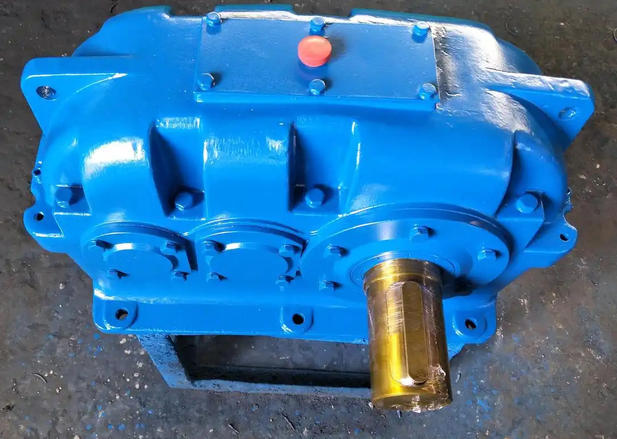
The sand washing machine is stuck and trapped, and the gearbox overload protection has been modified to prevent direct gear damage
1、 Install mechanical overload protection device
Mechanical protection is the first line of defense against gear damage. When the torque exceeds the safe value, power can be cut off or slipping can be achieved through physical means.
Install torque limiter (safety clutch): Install a friction or steel ball torque limiter between the reducer and the transmission shaft. When the stuck material causes the torque to exceed the set safe value (usually 1.2-1.5 times the rated torque), the clutch will automatically slip or disengage, cutting off power transmission and preventing damage to key components such as the motor and central shaft.
Use shear pin coupling: Install shear pins in the coupling between the motor and the reducer. When severe jamming occurs and the torque suddenly increases, the shear pin will be directly cut off to protect the internal gears of the gearbox from being twisted and broken. This modification has low cost, and only a new pin needs to be replaced when resetting.
Adopting elastic couplings: using couplings with elastic elements such as rubber or springs (such as elastic pin couplings) to absorb the impact energy of material jamming, buffer torque fluctuations, and reduce the rigid impact on the reducer.
2、 Upgrade electrical and intelligent control systems
By using electrical means to achieve 'hold and stop', the motor can avoid continuously outputting destructive torque.
Install speed/torque monitoring probe: Install a probe behind the output shaft or gearbox of the reducer to monitor the operating status in real time. When the gearbox stops rotating due to material jamming or abnormal speed is detected, the system can immediately issue an alarm and cut off the motor power supply.
Using PLC to achieve automatic shutdown and alarm: transforming the control circuit through a small PLC (industrial control board). Connect the signal of the detection probe to the PLC. When the card trigger signal is triggered, the PLC controls the relay to close, disconnects the motor start signal, stops the equipment, and triggers an alarm. This program can set a delay (such as 2-5 seconds) to filter out instantaneous fluctuations, and after shutdown, it must be manually reset before restarting to prevent the device from automatically restarting and causing secondary damage.
Variable frequency drive torque limit control: If the sand washing machine is controlled by a variable frequency drive, the "torque limit" function can be enabled to limit the maximum output torque of the motor within a safe range (such as within 1.5 times the rated value). At the same time, the current sensor of the frequency converter is used to monitor the overload state, and the output is instantly cut off when material jamming occurs.
3、 Source investigation and daily maintenance
While renovating the protective device, it is necessary to investigate the root cause of frequent material jamming and strengthen daily maintenance.
Troubleshooting the root cause of material jamming: When frequently overloading and holding the machine, the first thing to check is whether there are problems such as excessive feeding amount, foreign objects (such as iron blocks, large stones) jamming, etc. If external factors are excluded and frequent overloading still occurs, it is necessary to stop the machine and thoroughly inspect whether there are deep-seated mechanical faults such as bearing damage and gear wear inside the reducer.
Regular lubrication and fastening: Regularly check the oil level and quality of the gearbox, replace deteriorated lubricating oil in a timely manner, and avoid increasing operating resistance due to lubrication failure. At the same time, check the bolts of high-frequency vibration parts such as the motor base and groove support every month to prevent equipment load from being exacerbated by loose components.