How to choose a reducer for a printing and dyeing machine? Identify these three core working conditions and choose the wrong one to waste money
Firstly, prioritize matching the operating mode of the working conditions. Most printing and dyeing production lines operate continuously throughout the year, with belt drives, slurry mixing, and winding mechanisms running non-stop throughout the entire process, requiring extremely high heat resistance and wear resistance of reducers. It is recommended to prioritize models such as worm gear reducers and helical gear reducers that are suitable for long-term operation, and avoid using lightweight civilian models to prevent problems such as high temperature rise and accelerated gear wear during long-term full load operation. If it is a small printing machine or frame lifting system, the compact NMRV075 worm gear reducer is a cost-effective choice, with small size, flexible installation, and perfect adaptation to small equipment spaces.
Secondly, match the torque and speed according to the device's functionality. The requirements for transmission parameters vary greatly in different printing and dyeing processes: dyeing, shaping, and fabric guiding require low-speed and high torque output to ensure smooth fabric transportation without stretching or wrinkling; The printing process requires high-precision transmission, uniform torque, and stable rotational speed to ensure accurate pattern alignment. The R series helical gear reducer supports multi-stage transmission with a wide range of reduction ratios, up to 289.60, perfectly adapting to low-speed and heavy-duty printing and dyeing conditions. The transmission efficiency can reach 94% -98%, energy-saving and stable.
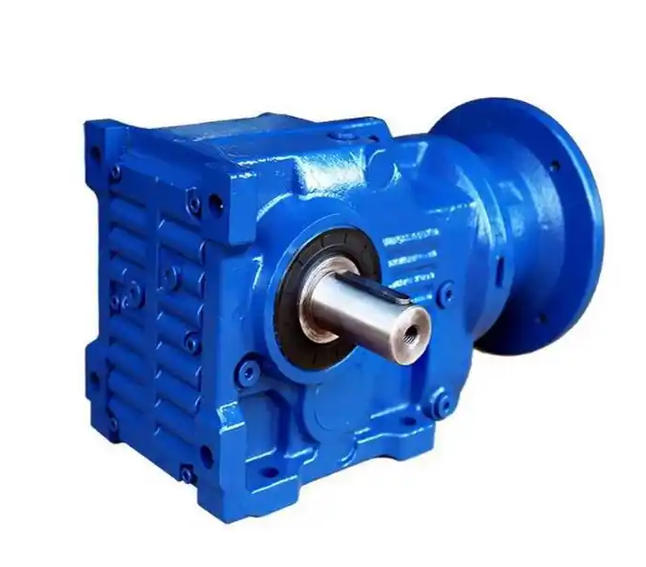
Finally, adapt to the special environment of the workshop. The printing and dyeing workshop has high water vapor and heavy dye acid-base mist, which makes ordinary reducers prone to shell corrosion, lubricant deterioration, and oil seal leakage. When selecting, attention must be paid to anti-corrosion sealing design, and models with thickened cast iron shells and double-layer sealing structures should be preferred to effectively isolate water vapor and corrosive media, reduce oil leakage and jamming faults, and significantly reduce maintenance frequency.
In summary, the selection of printing and dyeing machine reducers does not depend on the brand, but on the compatibility. Only by meeting the three core requirements of continuous operation, high precision, and corrosion resistance can the equipment operate stably, reduce downtime losses, and improve the qualification rate of printing and dyeing products.